

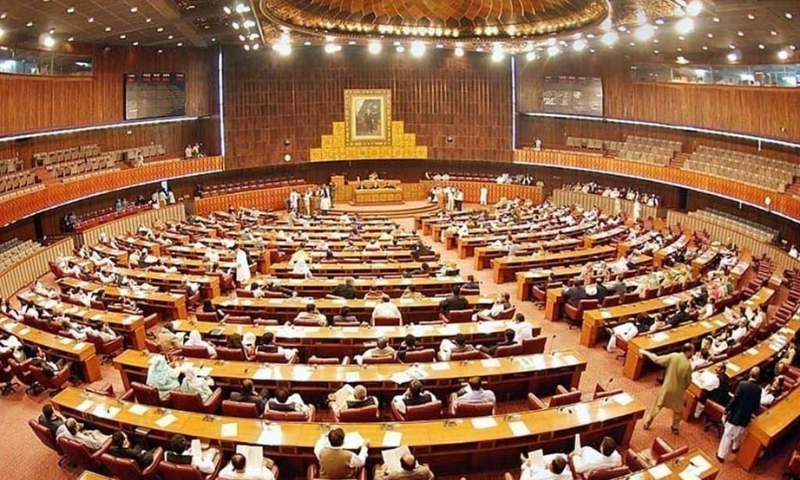

The government has proposed new changes to the 27th Constitutional Amendment Bill, aiming to refine legal terminology and clarify constitutional authority. Both government and opposition lawmakers are actively submitting their respective amendments during the ongoing National Assembly session.
Once passed by the National Assembly, the revised bill will return to the Senate for final approval. The move underscores the government’s intent to finalize constitutional reforms after several rounds of discussions and negotiations between parliamentary groups.
Expansion of Clauses in the Amendment Bill
According to official sources, three additional amendments are being added to the bill, increasing the total number of clauses from 59 to 62. These revisions focus on judicial structure, terminology, and legal interpretation within the Constitution.
One key proposal seeks to formally replace the term “Chief Justice” with “Chief Justice of Pakistan.” The government argues that this change will remove legal ambiguity and strengthen constitutional clarity regarding the title of the country’s top judge.
Amendment to Article 6 on High Treason
A significant part of the new draft focuses on Article 6 of the Constitution, which defines the offence of high treason. Article 6 currently states that any individual who abrogates, suspends, or subverts the Constitution through force, or aids in doing so, commits high treason.
Clause (2A) of the article adds that no act of high treason can be validated or condoned by any court, including the Supreme Court or High Courts.
Under the proposed amendment, this prohibition will now explicitly extend to the Federal Constitutional Court, ensuring that acts of rebellion or treason cannot be legitimized by any judicial body within Pakistan.
Structural Reforms in the Judiciary
The government also aims to provide a clearer definition of judicial roles and the structure of the proposed Federal Constitutional Court. The reforms are expected to outline how this new court would function alongside the Supreme Court and provincial High Courts, ensuring better separation of powers and judicial transparency.
Officials believe these reforms will bring consistency and precision to constitutional interpretation, while preventing overlapping jurisdiction between courts.
Opposition Tables Counter-Amendments
Meanwhile, the opposition has introduced 11 counter-amendments opposing several aspects of the bill. Their primary concerns relate to the restructuring of the higher judiciary and the proposed clauses that could offer immunity in certain cases.
Opposition leaders argue that some provisions could centralize judicial authority and limit the independence of existing courts. Negotiations between the government and opposition are ongoing, as both sides attempt to reach consensus on contentious clauses.
Law Minister Defends the Reforms
During the previous National Assembly session, Law Minister Azam Nazeer Tarar defended the proposed constitutional changes. He stated that the unchecked use of suo motu powers in the past had led to judicial overreach, describing it as something that had “become a monster.”
He maintained that introducing clearer boundaries within the judicial system would make Pakistan’s justice process more transparent, balanced, and accountable.
Next Steps in Legislative Process
Following the National Assembly’s approval, the amended bill will be presented in the Senate for deliberation. The ruling coalition has instructed all senators to ensure their presence at the next session, indicating the government’s urgency to pass the reforms.
Once both houses approve the legislation, the 27th Amendment Bill will officially become part of Pakistan’s Constitution, marking a major milestone in the country’s ongoing efforts to modernize its legal and judicial framework.
