

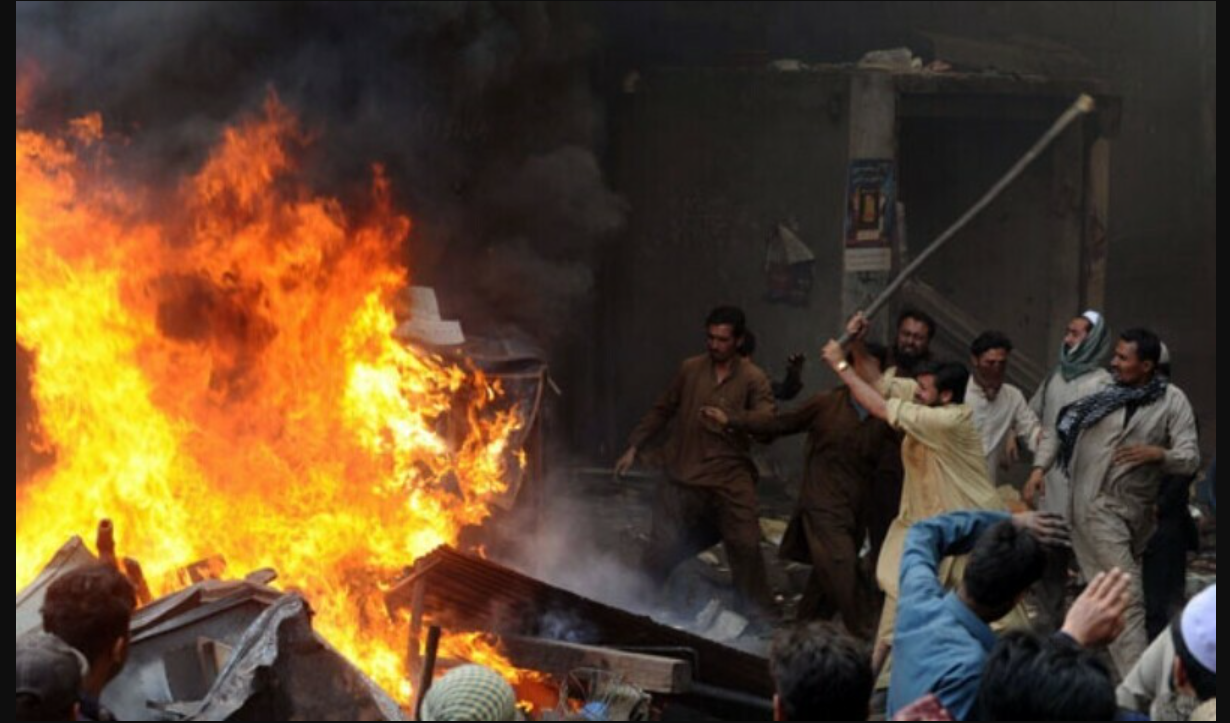

Authorities in Faisalabad have registered terrorism cases against hundreds of individuals following violent attacks on Ahmadi worship places during Independence Day celebrations. The disturbing incidents highlight the ongoing challenge of religious intolerance in Pakistan, as homes and places of worship belonging to the Ahmadiyya community were targeted by mobs.
Cases Registered Under Anti-Terrorism Act
Police confirmed that two First Information Reports (FIRs) have been lodged against more than 300 suspects, with 47 men specifically named. The rest remain unidentified. Charges were filed under Section 7 of the Anti-Terrorism Act, 1997, as well as multiple sections of the Pakistan Penal Code (PPC), including those related to blasphemy, property damage, house trespassing, theft, and rioting.
The suspects are accused of participating in coordinated attacks against Ahmadi worship places in Faisalabad’s Kartarpur area. Witness accounts describe the mob as armed with rods, sticks, and bricks, gathering under the guise of Independence Day processions to launch the assault.
Worship Places Set on Fire and Minarets Destroyed
During the violence, two Ahmadi worship places were attacked. The mob pelted the buildings with stones and bricks before tearing down their minarets. One of the worship places was set on fire, leaving behind scenes of destruction and deep fear within the community.
These places of worship, constructed before 1984, have long been a symbol of the Ahmadi community’s faith. Their desecration has not only caused material loss but has also intensified a sense of insecurity among local Ahmadis.
Attacks Extend to Nearby Homes
The violence was not confined to religious structures alone. Nearby homes belonging to Ahmadi families were also attacked, with windows shattered and residents injured after stones were hurled into their houses. Families described the ordeal as terrifying, with children and elderly members left traumatized.
Community Condemnation and Calls for Justice
Aamir Mahmood, a spokesperson for the Ahmadiyya community, strongly condemned the attacks. He stated that members of the community had been peacefully celebrating Independence Day when the mob struck.
“This is not the freedom envisioned by Pakistan’s founders,” he remarked. “Unless those who commit such crimes face justice, intolerance will continue to grow. Authorities must ensure protection for every citizen, regardless of faith.”
The community has demanded strict action against those involved and called on law enforcement agencies to provide long-term security for vulnerable groups.
Police Response and Arrests
Police sources confirmed that 25 individuals have been arrested so far, while efforts are ongoing to apprehend the remaining suspects. Officials did not disclose the identities of those arrested or confirm whether they were among the 47 nominated in the FIRs.
Human Rights Concerns
The incident has drawn criticism from human rights advocates, who have warned about the rise of hate speech and violence targeting religious minorities in Pakistan. Calls have been made for the state to implement the 2014 Supreme Court judgment on protecting minority rights and holding perpetrators of hate crimes accountable.
Civil society organizations have also urged citizens to reject divisive narratives that endanger peaceful coexistence and social harmony.
The attacks in Faisalabad underscore the pressing need for stronger enforcement of laws against religiously motivated violence. While initial arrests have been made, the road to justice remains uncertain. Ensuring accountability and protecting minority communities will be a critical test for both law enforcement and policymakers in Pakistan.
