

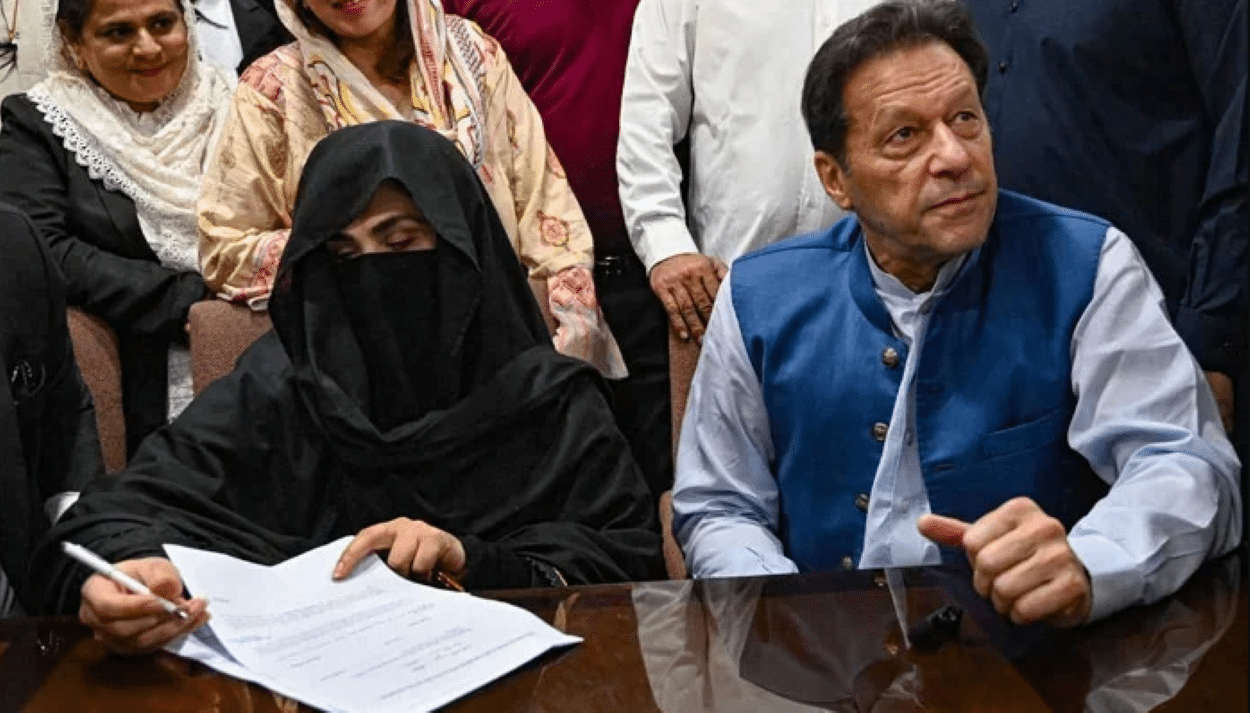

A district and sessions court in Islamabad is set to announce its verdict on the pleas of Pakistan Tehreek-e-Insaf (PTI) founder Imran Khan and his wife, Bushra Bibi, challenging their conviction in the iddat case, also referred to as the un-Islamic nikah case. Additional Sessions Judge Muhammad Afzal Majoka has reserved the verdict and will deliver it at 3 PM today.
In February, the couple was sentenced to seven years in prison and fined Rs500,000 each after a trial court determined their marriage was fraudulent, following a complaint from Bushra’s ex-husband, Khawar Maneka. Khan and Bushra subsequently appealed their conviction and sought relief from the Islamabad High Court (IHC).
This verdict is particularly crucial for Khan, who has been in jail since August last year due to a conviction in the Toshakhana case, alongside other charges that emerged ahead of the February 8 elections. Despite receiving relief in several cases, including the £190 million reference and Toshakhana, as well as an acquittal in the cipher case earlier this month, Khan remains incarcerated because of the iddat case conviction.
He has been granted bail in multiple cases related to events on May 9 in Lahore, Rawalpindi, and Faisalabad. Last month, the IHC ordered the district court to decide on the pleas for suspension of the sentence within ten days and the pleas challenging the conviction within a month.
Following this directive, Judge Majoka rejected Khan and Bushra’s request for suspension of their sentence on June 27, stating that there were no grounds for such suspension. The court’s ten-page ruling dismissed both petitions under Section 426 of the Criminal Procedure Code.
The verdict has sparked strong condemnation from the PTI, which described it as “absolutely ridiculous.” PTI leaders, anticipating Imran’s release, staged protests outside Adiala jail, where the court had been established for the security of the former prime minister. The National Assembly opposition leader expressed intentions to challenge the verdict in the high court, criticizing the politicization and weaponization of personal matters between a husband and wife.
