


MOSCOW: Russia’s state-run Rossiya 1 TV channel aired a segment on Sunday evening threatening to strike European capitals.
“Almost all European capitals will be under threat if our missiles are stationed in Kaliningrad: Berlin, Warsaw, all the Baltic states, Paris, Bucharest, Prague, and of course, the American bases in Germany,” stated TV host and State Duma lawmaker Yevgeny Popov during the broadcast, as highlighted by the independent investigative news outlet Agentstvo.
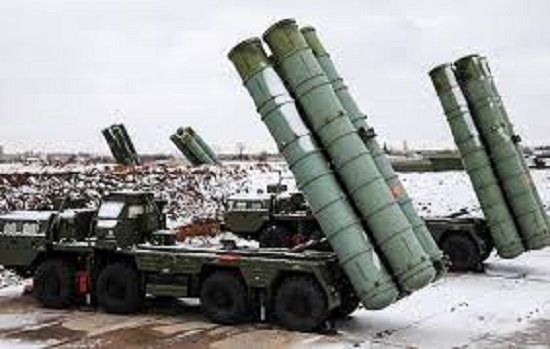
The channel displayed a map highlighting potential targets in Europe following the White House’s announcement at a NATO summit that it would periodically station long-range weapons in Germany starting in 2026 as a deterrent.
“Special attention to Britain, our traditional enemy… Britain is in the most vulnerable position — basically, three missiles are enough and this civilization will collapse,” Popov added.
This statement echoes the Kremlin’s warning that the deployment of American missiles in Germany could make European capitals targets for Russian missiles.
“Europe is a target for our missiles, and our country is a target for U.S. missiles in Europe,” Kremlin spokesman Dmitry Peskov said. “We have enough capacity to contain these missiles, but the potential victims are the capitals of these countries.”
Peskov also suggested that a confrontation of this kind could undermine Europe as a whole, similar to how the Cold War ended in the Soviet Union’s collapse.
“Europe is coming apart. Europe is not living its best moment. In a different configuration, a repeat of history is inevitable,” he remarked.
Responding to the Kremlin’s warning, a U.S. State Department spokesperson stated that the United States and NATO “do not seek a military conflict with Russia… but any military action directed against a NATO Ally would trigger an overwhelming response.”
Currently, the German army does not possess long-range missiles that launch from the ground, only cruise missiles that can be fired by aircraft.
Following the end of the Cold War, the United States significantly reduced the number of missiles stationed in Europe as the threat from Moscow receded. However, NATO countries, led by the U.S., have been bolstering their defenses in Europe since Russia’s military campaign in Ukraine began in 2022.
