


The federal government’s decision to ban the main opposition party, Pakistan Tehreek-e-Insaf (PTI), has not been well received by its key ally, the Pakistan Peoples Party (PPP), which has distanced itself from this controversial action.
PPP’s Information Secretary Shazia Atta Marri stated that Bilawal Bhutto Zardari’s party, a crucial ally of the Pakistan Muslim League-Nawaz (PML-N) led government, was not consulted regarding the ban on the Imran Khan-founded party.
These comments come in the wake of Prime Minister Shehbaz Sharif’s announcement to ban PTI due to its alleged involvement in the events of May 9 and accusations that PTI leaders attempted to undermine Pakistan’s agreement with the International Monetary Fund (IMF).
Federal Information Minister Attaullah Tarar revealed the decision in a press conference, asserting that the PTI and Pakistan “cannot co-exist.” He mentioned that the ban would be presented to the federal cabinet and the Supreme Court.
Additionally, the minister indicated that the government plans to file treason cases against former Prime Minister Khan, former National Assembly Deputy Speaker Qasim Suri, and former President Arif Alvi for their roles in the cipher case, the dismissal of the no-confidence motion, and the subsequent dissolution of the National Assembly.
The announcement triggered a strong response from PTI, which has called for invoking Article 6 of the Constitution against those responsible for what they consider unconstitutional actions, despite the existence of a constitution.
PTI has urged the ruling coalition allies, including PPP and the Muttahida Qaumi Movement-Pakistan (MQM-P), to clarify their stance on the matter.
Marri emphasized that the PPP would engage in consultations regarding the government’s decision to ban PTI. Sindh’s Planning & Development and Energy Minister Nasir Hussain Shah also stated that the PPP “is not in favor of banning any political party,” adding that they were not consulted on the issue.
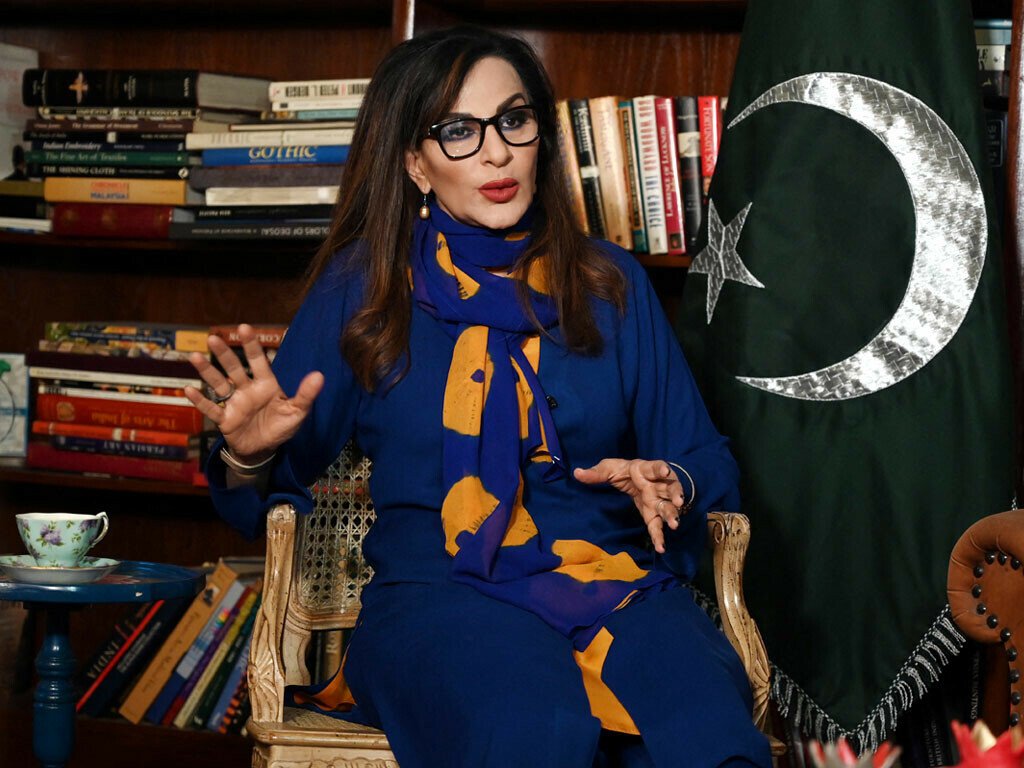
PPP Senator Sherry Rehman confirmed the lack of consultation and expressed surprise at the government’s decision, stating they had no prior knowledge of such a move. She acknowledged that, as allies, they should have been involved in the discussion.
When asked if banning PTI would achieve any results, Rehman responded negatively, asserting that such actions would not yield positive outcomes. She noted that despite past challenges, the PPP remains strong today.
Rehman argued that bans or censorship are not effective solutions and that alternative approaches should be sought to address issues.
The PPP’s distancing from the PML-N government’s decision is significant, considering the party is a key ally in the administration and holds an important political and parliamentary position, especially after the February 8 elections where no party secured a simple majority.
Bilawal’s party’s support is vital for the coalition’s stability, particularly as PTI-backed independent candidates became the largest single group in the elections due to a Supreme Court ruling that deemed them eligible for reserved seats.
This situation has deprived the ruling coalition of a two-thirds majority in the National Assembly. PTI leader Asad Qaiser also indicated that the party might consider a no-confidence motion against PM Shehbaz if it secures enough seats.
Rehman’s views reflect those of other senior PPP leaders, including former Senate Chairman Mian Raza Rabbani, who opposed the government’s decision, stating that banning a political party goes against democratic norms and would lead to increased political chaos and economic challenges.
Farhatullah Babar criticized the idea of banning a political party as “absurd,” asserting that launching treason cases against political leaders is similarly irrational. He warned that such decisions would exacerbate the political crisis, jeopardizing both democracy and the state’s stability in an already critical situation.
