

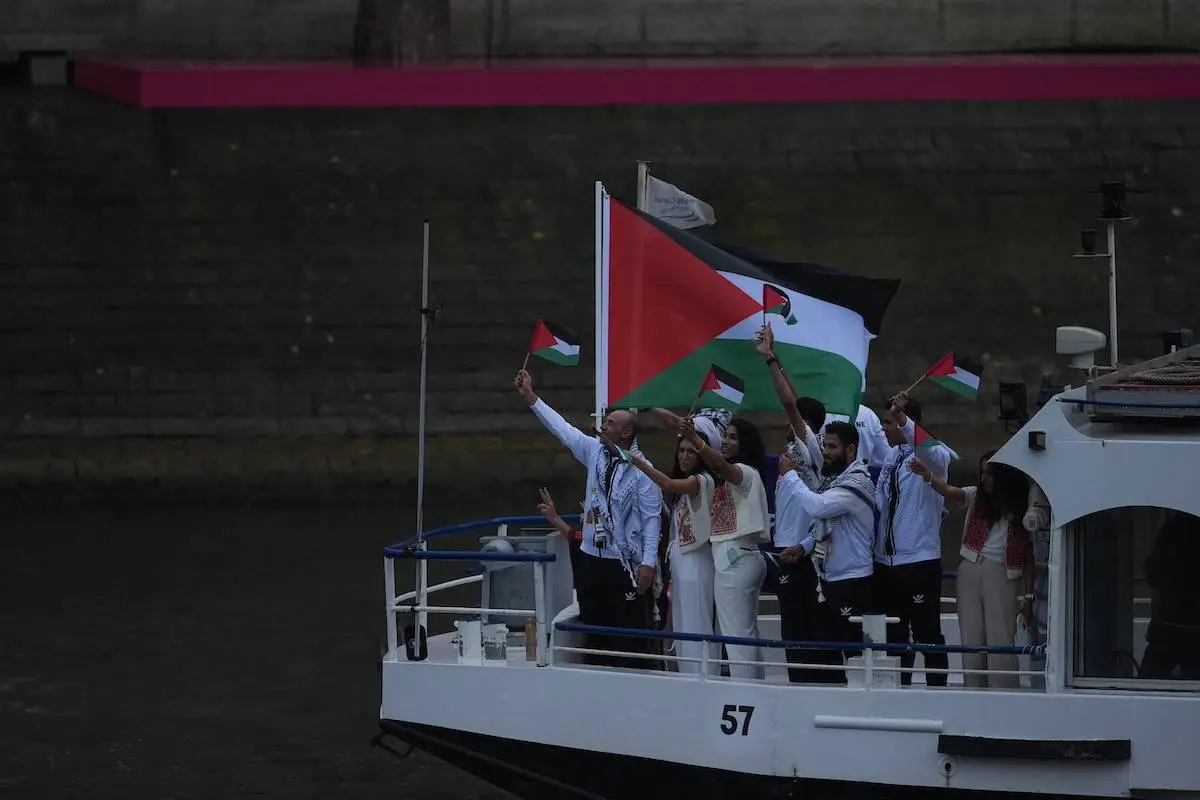

As Israeli and Palestinian judoists took to the mats at the Paris Olympics on Tuesday, the ongoing conflict in their homeland weighed heavily on their minds.
The athletes, one from each side, competed but did not advance past the first round. Their reactions reflected the personal impact of the conflict and the challenges faced by organizers in fostering an Olympic truce amidst ten months of fighting between Israel and Hamas in Gaza.
Feras Badawi, a Palestinian athlete who lost his match in the under 81 kg category, expressed his reluctance to compete against Israeli athletes or even shake their hands due to the violence in Gaza that has resulted in significant casualties.
In contrast, Israeli judoka Gili Sharir, who lost her bout in the women’s under 63 kg category, acknowledged the ongoing conflict but emphasized her pride in representing Israel and hoped for sports to rise above politics.
The situation has been further complicated by incidents such as the disqualification of an Algerian judoka who was scheduled to face an Israeli competitor, and the broader political tensions surrounding the Games. There have been protests and political statements, with Palestinian athletes displaying political symbols and Israeli officials criticizing the Palestinian Olympic Committee’s demands for Israel’s suspension from the Olympics, which the POC compares to Russia’s suspension over its invasion of Ukraine.
The Palestinian Olympic Committee has accused the IOC of double standards for not addressing their concerns and criticized Israeli athletes, including judoka Peter Paltchik, for allegedly glorifying the conflict. In response, the Israeli embassy in Paris labeled these accusations as attempts to discredit and harm their athletes, while the Israeli Olympic Committee condemned Rajoub’s remarks and chose to focus on the positive representation of Israel through their athletes and flag.
