

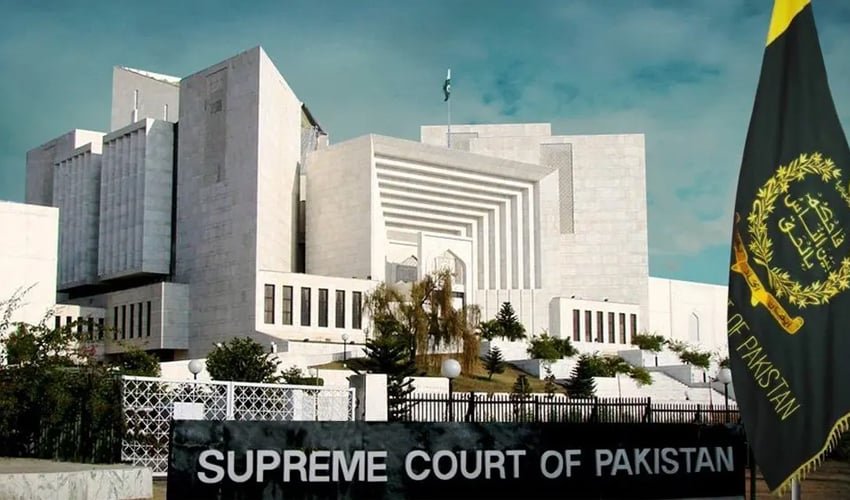

ISLAMABAD: The federal cabinet, led by Prime Minister Shehbaz Sharif, approved the Supreme Court (Practice and Procedure) Amendment Ordinance 2024 on Friday.
The cabinet gave its approval “through circulation” after the Ministry of Law submitted the ordinance to the prime minister and the cabinet late Thursday night.
The ordinance specifies that court benches will consider cases based on fundamental human rights and matters of public importance. It also mandates that cases will be heard in the order they are listed unless a reason is provided for any deviation.
Furthermore, it states that each case and appeal will be recorded, with transcripts made publicly available.
Sources earlier said that the amendment would grant the Chief Justice of Pakistan (CJP) additional authority to assign cases. The CJP will also have the power to nominate a replacement committee member if one is absent, they added.
Under the current Supreme Court Practice and Procedure Act, a three-member committee is responsible for forming benches. Sources confirmed that the Ministry of Law had prepared the amendment and submitted it for cabinet approval.
What is the Supreme Court (Practice and Procedure) Act 2023?
The Pakistan Democratic Movement (PDM) passed the Supreme Court (Practice and Procedure) Act 2023 during its final days in office to regulate the powers of the chief justice.
However, before the law could be enacted on April 21, 2023, an eight-member bench led by then-CJP Umar Ata Bandial issued a stay order on April 13, 2023, halting its implementation.
The 2023 Act transferred the authority to take suo motu notice to a three-member committee, which includes the chief justice and senior judges. It also aimed to increase transparency in Supreme Court proceedings and introduced the right to appeal.
Regarding bench formation, the law stipulated that all cases and appeals would be heard by benches constituted by a committee of the CJP and the two most senior judges. Decisions of the committee would be made by majority vote.
For cases invoking the Supreme Court’s original jurisdiction under Article 184(3), the Act required that such matters be first presented to the committee. In cases requiring constitutional interpretation, the committee would form a bench of no fewer than five judges.
The law also allowed for appeals against any decisions made by a bench exercising Article 184(3) jurisdiction. These appeals must be filed within 30 days and heard by a larger bench within 14 days.
Additionally, the Act granted parties the right to select legal counsel of their choice when filing review applications under Article 188 of the Constitution.
