

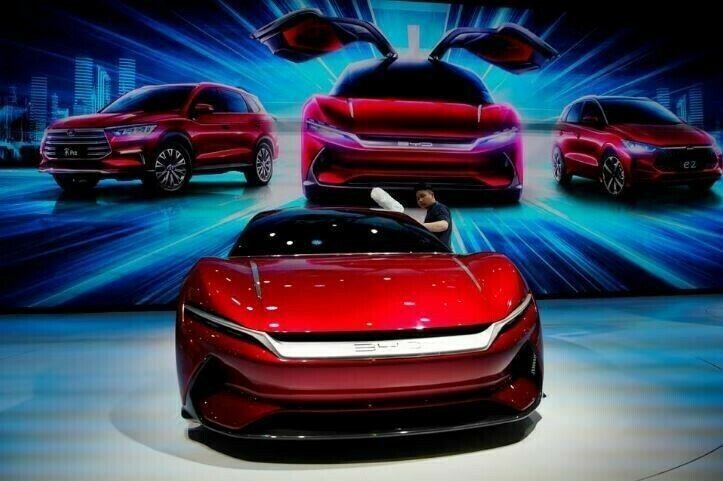

Chinese electric vehicle (EV) giant BYD is making a bold entry into South Asia by establishing its first assembly plant in Pakistan. This initiative, in partnership with Hubco, Pakistan’s leading private electricity producer, aims to invigorate the country’s automotive manufacturing sector and position it as an export hub for electric vehicles.
BYD’s entry into Pakistan follows its exclusion from the Indian market due to restrictions on Chinese investments. Pakistan’s government, however, is fully backing the venture, viewing it as a strategic opportunity to boost exports to markets in Africa and South Asia.
This expansion is part of BYD’s broader strategy to create a global manufacturing presence. With rising tariffs on Chinese exports, including electric vehicles, the company aims to bypass these trade barriers by producing locally in key international markets.
Although BYD’s international growth is largely seen as a positive move, analysts warn that the company may face challenges in adapting to different labor laws, work practices, and cultural norms in various regions.
Hubco, which is involved in numerous Chinese power projects under the Belt and Road Initiative, plans to leverage its power generation expertise to develop an EV charging infrastructure across Pakistan.
The joint venture aims to sell 100,000 BYD electric vehicles annually by 2030, marking a significant contribution to Pakistan’s automotive market.
While specific details of the BYD-Hubco partnership, such as investment size and vehicle models, are still under negotiation, the collaboration has generated considerable optimism. Many hope it will boost Pakistan’s domestic auto industry and contribute to economic growth through exports.
