

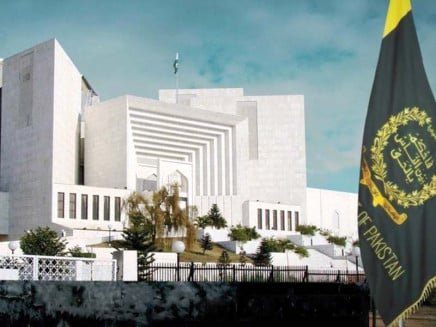

The coalition government faces a critical deadline of less than 30 hours to appoint a new Chief Justice of Pakistan (CJP) following the recent enactment of the 26th Constitutional Amendment. This legislation mandates that the top judicial position be filled three days before the incumbent’s retirement. Chief Justice Qazi Faez Isa is scheduled to retire on October 25, 2024, making it essential for the new appointment to be finalized by midnight on October 22.
As time runs short, discussions are ongoing regarding candidates for the parliamentary committee tasked with the nomination process. This committee requires a two-thirds majority to make decisions and will consist of members from both the National Assembly and the Senate.
Parliamentary Committee Composition
Senate Members:
- PTI: Senator Ali Zafar
- JUI: Kamran Murtaza
- National League: Azam Nazir Tarr
- People’s Party: Farooq H. Naik
National Assembly Members:
- MQM: Farooq Sattar, Aminul Haque
The 26th Amendment also establishes that the CJP’s term is fixed at three years or until the judge reaches the retirement age of 65. The amendment was signed into law early on Monday by President Asif Ali Zardari, following Prime Minister Shehbaz Sharif’s recommendation.
Importantly, the selection process for the Chief Justice will now include a pool of the three most senior judges of the Supreme Court, moving away from the previous practice of relying solely on seniority.
According to the current seniority list, Justice Syed Mansoor Ali Shah is the most senior, followed by Justice Munib Akhtar and Justice Yahya Afridi. If any of these judges decline the position, the next senior judge will be considered.
A report indicates that Justice Yahya Afridi is the leading candidate for the Chief Justice position. Government insiders suggest that his neutral and non-controversial stance amid recent divisions in the apex court may enhance his chances.
Overview of Leading Candidates
- Justice Mansoor Ali Shah: As the senior-most judge, he is a significant contender. Previously, he served as the Chief Justice of the Lahore High Court before his promotion to the Supreme Court in early 2018.
- Justice Munib Akhtar: Born in 1963, he joined the Supreme Court in 2018 and is considered a notable candidate due to his extensive judicial experience.
- Justice Yahya Afridi: The third senior-most judge, he was the Chief Justice of the Peshawar High Court before ascending to the Supreme Court in 2018.
Formation of Parliamentary Committee
Following the new law, efforts to form the parliamentary committee are underway, with the Speaker of the National Assembly requesting nominations from parliamentary leaders. The committee will consist of eight members from the National Assembly and four from the Senate.
The People’s Party has already submitted three names for the committee: former Prime Minister Raja Pervez Ashraf, Farooq H. Naik, and Syed Naveed Qamar. Naik will represent the Senate, while Ashraf and Qamar will represent the National Assembly.
Additionally, the Jamiat Ulema-e-Islam (F) has nominated Senator Kamran Murtaza for the committee.
The Speaker has sent letters to various party leaders, including those from the Muslim League (N), People’s Party, Sunni Etihad Council, and MQM Pakistan, soliciting their nominations for committee representation.
Parliamentary Proceedings
The National Assembly convened late on Sunday night after delays to discuss the 26th Constitutional Amendment. Prime Minister of Law Nazir Tarar presented the amendment, which passed with a majority of 225 votes in favor, against only 12 votes opposing it.
After the approval, Prime Minister Shehbaz Sharif spoke in the House, highlighting the importance of justice in the country and declaring the day a historic milestone. He stated that the passage of the amendment reflects national unity and consensus.
With the current Chief Justice’s term nearing its end, the swift formation of the parliamentary committee is expected, paving the way for the new CJP’s appointment before the deadline. The nation looks to the judiciary for guidance and stability during these challenging times.
