

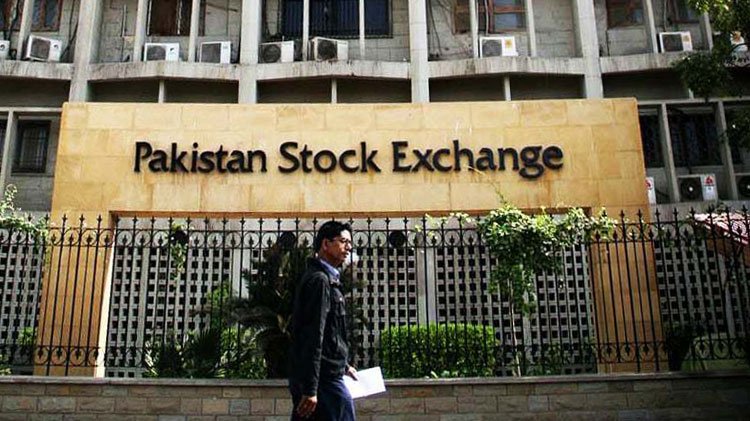

ISLAMABAD: On Wednesday, the stock market soared past the significant 87,000-point mark, reaching a new record high, driven by optimism surrounding Pakistan’s economic outlook, supported by strong data and positive projections from the International Monetary Fund (IMF) for fiscal year 2024-25.
The Pakistan Stock Exchange (PSX) benchmark KSE-100 Index surged to 87,128.04 points during early trading, up from the previous day’s close of 86,466 points.
A bullish trend was observed, with heavy buying in blue-chip stocks across sectors such as automobile assemblers, cement, chemicals, commercial banks, oil and gas exploration companies, oil marketing companies (OMCs), and refineries.
Samiullah Tariq, an analyst at Arif Habib Limited, noted that investor sentiment was influenced by falling yields on fixed-income government securities, signaling potential future interest rate cuts. Recently, the one-year Treasury Bill (T-Bill) and three-year Pakistan Investment Bond (PIB) rates have been hovering around 13% and 12%, respectively, driven by increased demand for fixed-income securities, leading to capital gains.
“Strong corporate earnings are also driving the market,” Tariq added. The first quarter of FY2024 is unfolding with forecasts of robust payouts and dividends, attracting investors to key sectors.
The market’s upward momentum has also been supported by the passage of the 26th Amendment, with major index players expected to deliver attractive returns during the earnings season. This comes amid hopes for stability following improvements in economic data.
The constitutional amendment, passed after weeks of intense government lobbying, limited the judiciary’s powers in appointing the Chief Justice. The amendment was approved during an extraordinary parliamentary session held on a public holiday, which extended overnight into early Monday morning.
The IMF has projected a 3.2% GDP growth rate for FY2025, with easing inflationary pressures expected to further boost the economy. This growth may also lead to a modest improvement in the unemployment rate.
Analysts attribute the market’s strength to a $119 million current account surplus in September and $771 million in foreign direct investment (FDI) during the first quarter of FY2025, a 48% increase year-on-year.
