


In light of India’s refusal to tour Pakistan for the 2025 Champions Trophy, the United States has emphasized the importance of sports diplomacy as a unifying force.
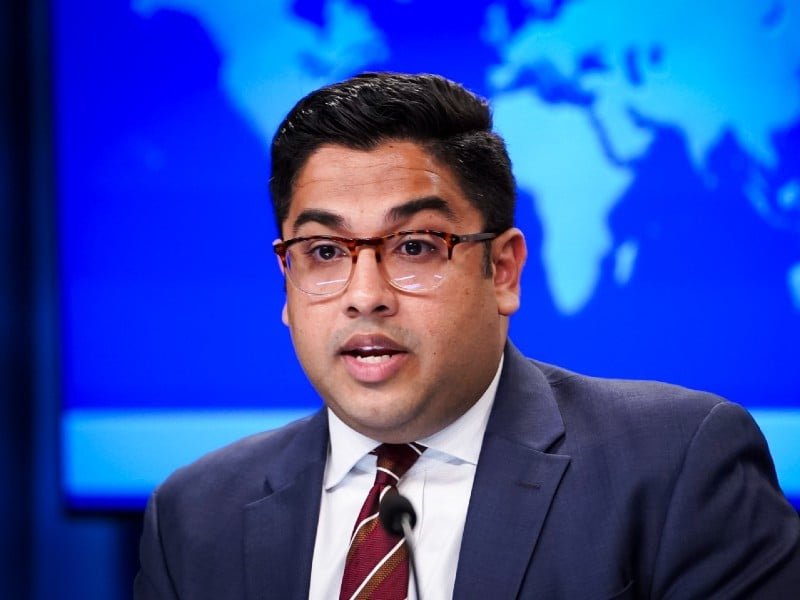
US State Department Deputy Spokesperson Vedant Patel highlighted this view in response to a question about the impact of Pakistan-India relations on the upcoming event.
“Sports are indeed a powerful connecting force. This department values the role that sports diplomacy plays in bringing people together. It’s something we know is incredibly important to the US State Department,” Patel said.
The cricketing world now faces a scheduling challenge for the Champions Trophy, one of the sport’s premier events after the World Cup.
Patel underscored that sports foster human and cultural connections, which the US administration has prioritized. However, he acknowledged that ultimately, this is a bilateral matter for India and Pakistan to address, either through sports or other diplomatic avenues.
“I will let them speak to their own bilateral relationship. Certainly not something for us to get in the middle of,” he added.
This development follows India’s decision not to participate in the Champions Trophy in Pakistan. Last week, the International Cricket Council (ICC) informed the Pakistan Cricket Board (PCB) of India’s refusal, placing the tournament’s future in question.
Pakistan had previously dismissed a proposed hybrid model that would allow India to play its matches at neutral venues, such as the United Arab Emirates. The PCB has since requested the ICC clarify India’s decision, as the board intends to stand firm against relocating any games outside Pakistan.
“If India’s participation benefits ICC’s revenue, then PCB’s role is equally critical. Without Pakistan-India matches, ICC revenues would suffer considerably,” sources say.
Pakistan has also hinted at boycotting ICC events in India if the ongoing political tensions continue to impact cricket.
This move could have significant financial and structural repercussions for global cricket, as Pakistan’s absence would likely reduce viewership and impact ICC’s projected revenue from broadcasters and sponsors.
The ICC, which recently secured $3.2 billion from broadcast rights for 2024-2027 and anticipates an additional $1 billion in revenue, relies heavily on high-profile Pakistan-India matchups, which consistently drive record viewership.
“A lack of India vs. Pakistan games in ICC events would disrupt broadcast and sponsorship agreements,” noted a source, emphasizing the critical role of these matches in supporting global cricket revenues.
In recent years, the ICC has ensured that India and Pakistan face each other at least once in major tournaments, recognizing the substantial revenue these games generate.
