

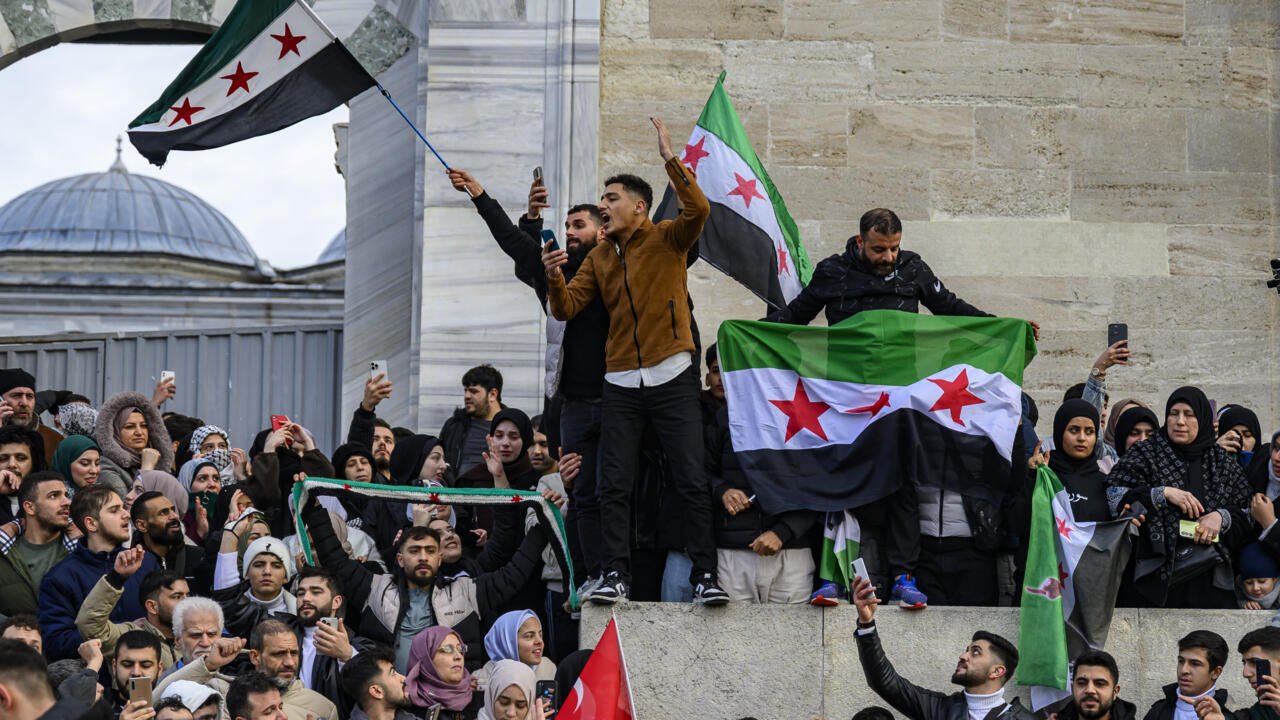

Syrians woke on Monday to a cautious sense of hope and uncertainty after rebels seized Damascus, prompting President Bashar al-Assad to flee to Russia, effectively ending a 13-year civil war and over five decades of his family’s authoritarian rule.
The swift advance of a militia coalition led by Hayat al-Tahrir al-Sham (HTS), a former al-Qaeda affiliate, marked a historic turning point for the Middle East. Assad’s ouster dismantled a key base for Iranian and Russian influence in the Arab world. Russian media confirmed that Assad and his family were granted asylum in Moscow, with Mikhail Ulyanov, Russia’s ambassador to international organizations in Vienna, sharing the news on his Telegram channel.
Global leaders welcomed the collapse of the Assad regime, acknowledging the profound implications for the region. U.S. President Joe Biden noted that Syria now faces a period of significant risk and transformation, marking the first time in years that Russia, Iran, and Hezbollah no longer wield dominant influence there.
Despite attempts to rebrand itself, HTS remains designated a terrorist organization by the U.S., Turkey, and the United Nations. The group now faces the monumental challenge of governing a war-torn nation and addressing the concerns of Syria’s diverse population.
Japan’s Chief Cabinet Secretary Yoshimasa Hayashi announced Tokyo was closely monitoring the evolving situation. Meanwhile, Assad’s downfall threatens to disrupt Iran’s weapons supply networks and jeopardizes Russia’s Mediterranean naval base, potentially shifting regional dynamics. The change also raises hopes for the return of millions of refugees displaced across Turkey, Lebanon, and Jordan.
Rebuilding Syria
The rebels now shoulder the responsibility of reconstructing a nation devastated by conflict, which left hundreds of thousands dead, cities reduced to rubble, and an economy crippled by sanctions. Syria will require billions in aid to recover.
Ahmed al-Sharaa, also known as Abu Mohammed al-Golani, the leader of HTS, addressed a jubilant crowd at Damascus’ Umayyad Mosque, a site of deep religious significance. Declaring this victory a pivotal moment for the region, he vowed to rebuild Syria into “a beacon for the Islamic nation.”
Elated but bewildered, freed political prisoners emerged from Assad’s notorious detention centers on Sunday, reuniting with their families in scenes of overwhelming emotion. The White Helmets, a volunteer rescue organization, dispatched teams to locate underground cells believed to hold remaining detainees.
Damascus remained calm overnight under a rebel-imposed curfew, with streets largely deserted. Some incidents of looting occurred, including a raid on Assad’s presidential palace. The rebel coalition announced plans to establish a transitional governing body to steer Syria toward stability.
