

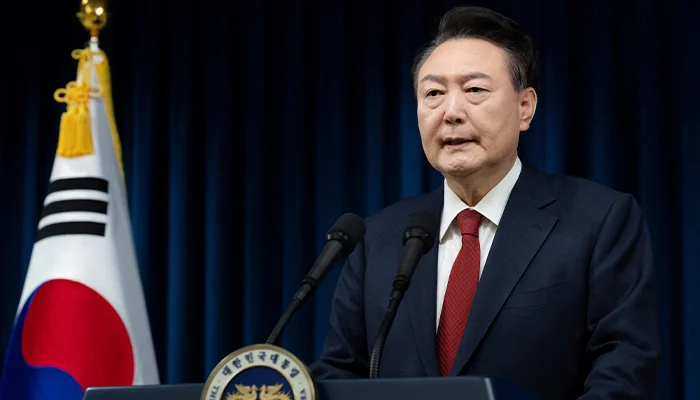

The head of South Korea’s high-ranking anti-corruption investigation office has imposed a travel ban on President Yoon Suk Yeol amid an ongoing investigation into his declaration of martial law last week, Yonhap news agency reported.
A Justice Ministry official confirmed during a parliamentary committee hearing on Monday that the travel ban had been enacted. The ban follows requests from South Korea’s police, prosecutors, and anti-corruption agencies as they widen their probes into allegations of rebellion tied to Yoon’s imposition of martial law.
Political Fallout
On Saturday, Yoon narrowly avoided an opposition-led impeachment attempt after most ruling party lawmakers boycotted the parliamentary vote. However, opposition parties have pledged to introduce a new impeachment motion this week.
A senior National Police Agency officer stated on Monday that authorities could detain Yoon if legal conditions are met. While sitting presidents in South Korea enjoy immunity from prosecution, that protection does not cover allegations of rebellion or treason. This means Yoon could face questioning and even detention over the martial law decree. However, many analysts believe police will avoid forcefully detaining him or searching his office to prevent a standoff with his presidential security detail.
Historical Parallels
The situation draws comparisons to former President Park Geun-hye, who was impeached in 2017 over a corruption scandal. Prosecutors were barred from entering her office and had to collect documents outside the presidential compound. After resisting questioning while in office, Park was arrested after the Constitutional Court upheld her impeachment and dismissed her from office.
Allegations and Arrests
The opposition Democratic Party has labeled Yoon’s martial law declaration as “unconstitutional, illegal rebellion, or a coup.” It has filed complaints with police against at least nine individuals, including Yoon and his former defense minister, over the rebellion allegations.
On Sunday, prosecutors detained former Defense Minister Kim Yong Hyun, who allegedly advised Yoon to declare martial law. Kim’s arrest marks the first detention in the unfolding martial law case.
The crisis has sparked intense political debate in South Korea, with observers closely watching how law enforcement and political institutions navigate this unprecedented challenge.
