

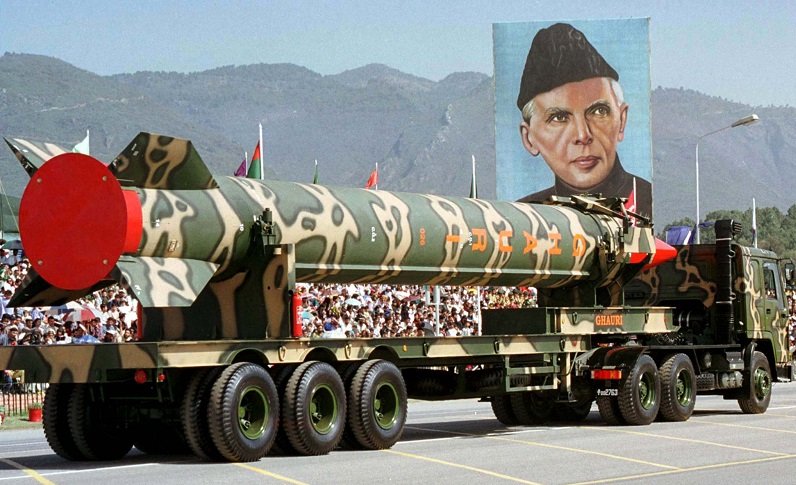

A senior White House official stated on Thursday that Pakistan, a nuclear-armed state, is developing long-range ballistic missile capabilities that could potentially enable it to strike targets beyond South Asia, including the United States.
Deputy National Security Adviser Jon Finer expressed concerns about Pakistan’s intentions, saying its actions raise “real questions.” Speaking at the Carnegie Endowment for International Peace, he remarked, “Candidly, it’s hard for us to see Pakistan’s actions as anything other than an emerging threat to the United States.”
This statement follows the U.S. State Department’s announcement a day earlier of additional sanctions targeting four entities associated with Pakistan’s ballistic missile program. The department cited these entities’ roles in proliferating or delivering long-range missile technology, describing the program as a “continuing proliferation threat.”
According to the State Department’s statement, the sanctions were imposed under Executive Order (EO) 13382, which targets proliferators of weapons of mass destruction and their delivery systems. The designated entities include Pakistan’s National Development Complex—responsible for its ballistic missile program—and Affiliates International, Akhtar and Sons Private Limited, and Rockside Enterprise. These entities were accused of supplying equipment and materials to advance Pakistan’s long-range missile development.
“Pakistan’s National Development Complex and these associated entities have materially contributed to the proliferation of weapons of mass destruction and their delivery systems, including missiles capable of delivering such weapons,” the statement read.
Pakistan strongly condemned the U.S. decision, labeling it as “biased” and warning of its potential to undermine regional stability. Foreign Office spokesperson Mumtaz Zahra Baloch emphasized that Pakistan’s strategic capabilities are designed solely to defend its sovereignty and maintain peace in South Asia.
“Such measures accentuate military asymmetries and have dangerous implications for strategic stability in our region and beyond,” Baloch said in a statement. She added that Pakistan’s strategic program is a sacred trust bestowed by its 240 million citizens, and its sanctity remains unwavering across the political spectrum.
The escalating rhetoric and sanctions highlight growing tensions between Islamabad and Washington, with both sides accusing the other of actions that could destabilize regional and global security.
