


PTI-Govt Negotiations
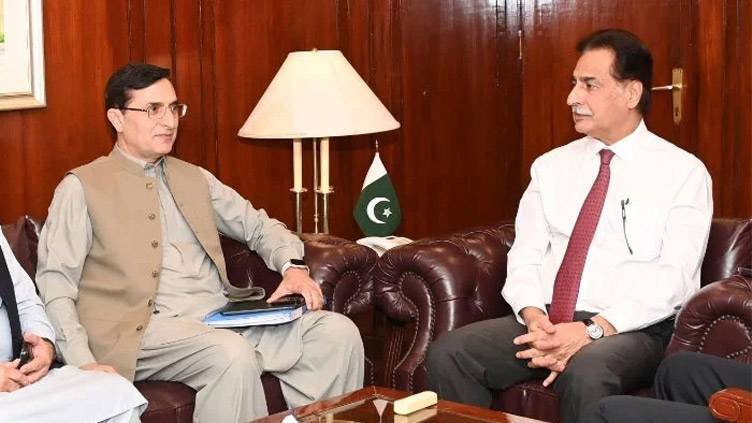
The long-awaited negotiations between the ruling government and the opposition Pakistan Tehreek-e-Insaf (PTI) officially began today (Monday) with the first meeting of the committees representing both sides at Parliament House.
These talks are seen as a crucial step in easing the political tensions that have been escalating in Pakistan, particularly following the incarceration of PTI founder Imran Khan.
Earlier this month, Imran Khan, in an effort to open dialogue, announced the formation of a PTI committee willing to negotiate with “anyone” in order to resolve political issues.
In response, Prime Minister Shehbaz Sharif formed a government committee on the recommendation of National Assembly Speaker Ayaz Sadiq, marking a significant step toward direct negotiations between the two parties.
The meeting, which is being chaired by NA Speaker Sadiq, includes key members of both the government and opposition committees. The government committee consists of nine members, including senior leaders from the ruling coalition.
Prominent members present today include Deputy Prime Minister and Foreign Minister Ishaq Dar, Prime Minister’s political aide Rana Sanaullah, and Senator Irfan Siddiqui, all from the Pakistan Muslim League-Nawaz (PML-N).
Other members include PPP’s Raja Parvez Ashraf and Naveed Qamar, MQM-P leader Dr Khalid Maqbool Siddiqui, and Istehkam-i-Pakistan Party (IPP) leader Aleem Khan. However, PML-Q leader Chaudhry Salik Hussain and Balochistan Awami Party’s Sardar Khalid Magsi were notably absent.
On the PTI side, the opposition committee members include PTI MNA Asad Qaiser, Sunni Ittehad Council Chairman Sahibzada Hamid Raza, and Senator Raja Nasir Abbas from Majlis Wehdat-i-Muslimeen (MWM).
The PTI’s committee also originally included several other notable leaders, including Opposition Leader in the National Assembly Omar Ayub Khan, Khyber Pakhtunkhwa Chief Minister Ali Amin Gandapur, and PTI Secretary General Salman Akram Raja, although they were not present at today’s meeting.
The main agenda of the talks focuses on two critical issues: the release of PTI workers and supporters who have been imprisoned and a judicial inquiry into the events surrounding the May 9 riots and the November 24 protests.
These demands are central to the PTI’s stance, especially as the party has faced increased repression and violence following protests over the past year, particularly after Imran Khan’s arrest.
The political situation became more tense after the PTI’s ‘Final Call’ power show last month, which led to renewed calls for banning the party and the formation of task forces aimed at addressing what the government deemed a “malicious campaign” led by PTI supporters. The PTI claims that dozens of its supporters have been killed, a claim the government has officially denied.
Despite the deteriorating relationship between PTI and the government, as well as the establishment, the willingness to engage in dialogue has opened a window for potential resolution.
The talks began with a softened approach from both sides, and Imran Khan has tasked Barrister Saif with uniting opposition parties, urging a coordinated effort under the leadership of Khyber Pakhtunkhwa Chief Minister Ali Amin Gandapur.
