

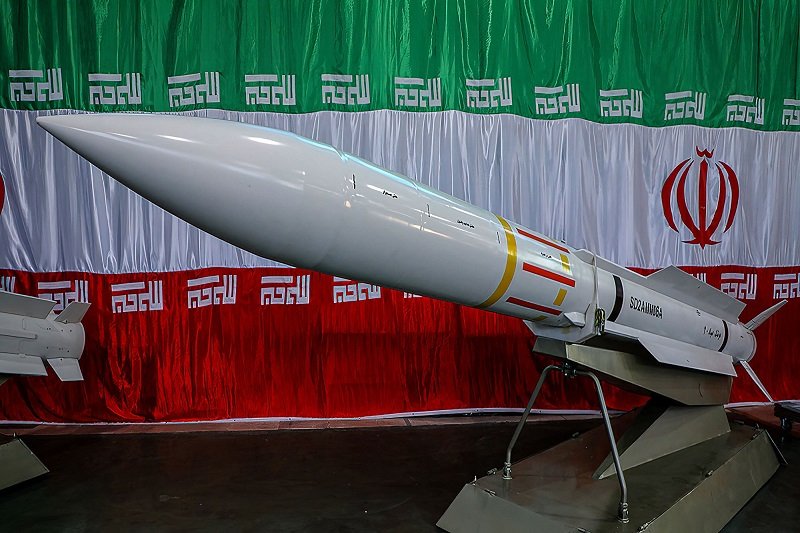

Iranian Foreign Minister Abbas Araghchi has underscored the pivotal role of the country’s missile capabilities in shaping its diplomatic relationships with global powers.
Speaking to Tasnim News Agency on Wednesday, Araghchi emphasized that Iran’s robust defense and deterrence capabilities have been instrumental in compelling major powers to engage in dialogue rather than pursue military action.
“Diplomacy is built on a foundation of power, and power stems from tangible capabilities,” Araghchi stated. He described Iran’s missile program as a cornerstone of this power, enabling the nation to secure a place at the negotiating table.
“I have said repeatedly, and I firmly believe, that without our missile capabilities, no one would have considered negotiating with us,” he asserted.
Reflecting on the extensive nuclear negotiations with the P5+1 countries, Araghchi argued that foreign powers turned to diplomacy primarily because they lacked the military capacity to dismantle Iran’s nuclear infrastructure.
“If they could have destroyed our nuclear facilities with a single military strike, why would they have bothered negotiating? Why spend over two years in intensive talks, with the U.S. Secretary of State and the foreign ministers of the P5+1 negotiating for 18 consecutive days to reach an agreement? The reality is that they could not eliminate our nuclear program militarily,” he explained.
In 2015, Iran signed the Joint Comprehensive Plan of Action (JCPOA) with the P5+1 and the EU, agreeing to limit its nuclear program in exchange for sanctions relief. The International Atomic Energy Agency (IAEA) subsequently verified Iran’s compliance with the deal.
However, during his first term, President Donald Trump withdrew the U.S. from the JCPOA and initiated a “Maximum Pressure” campaign, reimposing stringent sanctions on Iran. In response, Tehran began scaling back some of its commitments 1.5 years later, citing the failure of European signatories to mitigate the impact of the sanctions.
