

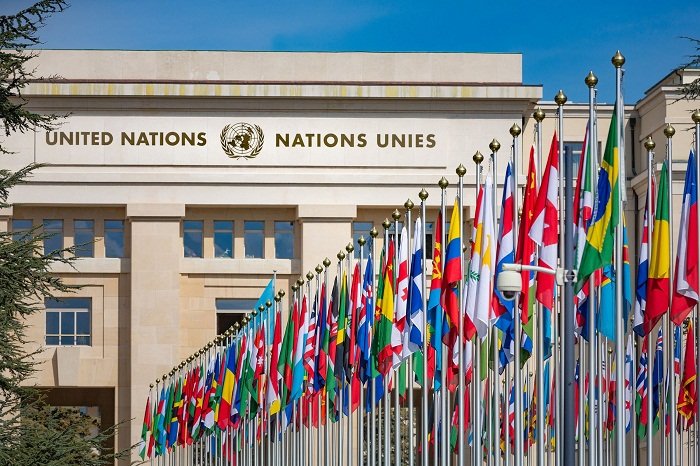

ISLAMABAD: The Pakistani flag was hoisted in front of the United Nations Security Council chamber on Thursday, marking the beginning of Pakistan’s eighth term as a non-permanent member (2025–2026) of the 15-member body.
During the official ceremony, flags of the five new non-permanent members—Pakistan, Denmark, Greece, Panama, and Somalia—were installed at the UNSC’s stakeout area at the UN Headquarters in New York. These countries replaced Japan, Ecuador, Malta, Mozambique, and Switzerland, whose terms concluded on December 31, 2024.
Ambassador Asim Iftikhar Ahmad, Pakistan’s Alternate Permanent Representative to the UN, ceremonially installed the national flag. In his remarks, he reaffirmed Pakistan’s commitment to the UN Charter’s principles, emphasizing peace, security, and the right to self-determination for oppressed peoples.
“Pakistan will always remain a strong voice for those under foreign occupation and for the realization of their right to self-determination,” Ambassador Ahmad stated. He underscored the importance of cooperative multilateralism, diplomacy, and conflict prevention in addressing global challenges and fostering stability.
Pakistan plans to partner with fellow Council members to pursue just and peaceful resolutions to international conflicts. Ambassador Ahmad highlighted the nation’s resolve to uphold international law and ensure the effective implementation of the Council’s decisions, while addressing the root causes of long-standing disputes and conflicts.
Pakistan will assume the presidency of the Security Council in July 2025, based on the alphabetical rotation of member states. This role will allow Islamabad to shape the Council’s agenda. Additionally, Pakistan will secure a seat on the ISIS and Al-Qaeda Sanctions Committee, which oversees designating individuals and entities as terrorists and imposing sanctions.
The Security Council, considered the UN’s most powerful body, comprises 15 members: five permanent members (Britain, China, France, Russia, and the United States) and 10 non-permanent members, rotated annually by geographic regions. The Council is responsible for maintaining international peace and security, with the authority to make legally binding decisions, impose sanctions, and authorize the use of force.
The tradition of the flag installation ceremony began in 2018, initiated by Kazakhstan. At this year’s ceremony, Kazakhstan’s permanent representative, Kairat Umarov, praised the incoming members, expressing confidence in their ability to contribute significantly to global peace and security.
