


Hamas released three Israeli hostages, and Israel freed 90 Palestinian prisoners on Sunday, marking the first day of a ceasefire in a 15-month war that has devastated the Gaza Strip and inflamed tensions across the Middle East.
The truce allowed Palestinians to return to bombed-out neighborhoods, beginning the daunting process of rebuilding their lives, as relief trucks delivered essential aid. Meanwhile, celebrations erupted in Gaza, with crowds cheering Hamas fighters emerging from hiding.
In Ramallah, fireworks lit the sky as buses carrying the freed Palestinian prisoners arrived, greeted by thousands of jubilant supporters. Among those released were 69 women and 21 teenage boys from the West Bank and Jerusalem, according to Hamas.
In Tel Aviv, hundreds of Israelis gathered outside the defense headquarters, cheering and shedding tears of relief as a live broadcast showed three female hostages—Romi Gonen, Doron Steinbrecher, and Emily Damari—being escorted into a Red Cross vehicle by Hamas fighters. The Israeli military later confirmed the women had been reunited with their mothers and released a video showing them in good health. Damari, who had lost two fingers in the October 7 attack when she was abducted, embraced her mother while smiling and holding up her bandaged hand.
Prime Minister Benjamin Netanyahu shared a message of national solidarity, telling a military commander by phone, “Romi, Doron, and Emily—an entire nation embraces you. Welcome home.”
The hostages reunited with their families at Sheba Medical Center, where emotional embraces turned from tears to laughter. Damari, wrapped in an Israeli flag, was among more than 250 individuals abducted and 1,200 killed in Hamas’s attack on Israel on October 7, 2023, according to Israeli sources.
Since then, Israeli attacks have claimed the lives of over 47,000 Palestinians, as reported by Gaza’s health officials. The conflict has left nearly all of Gaza’s 2.3 million residents homeless, with around 400 Israeli soldiers also losing their lives.
The ceasefire agreement halts fighting and facilitates aid deliveries to Gaza. It also stipulates that 33 of the approximately 100 remaining Israeli and foreign hostages be released in the first six weeks in exchange for nearly 2,000 Palestinian prisoners held in Israeli jails. Many of the hostages are believed to have perished.
In northern Gaza, residents navigated through a landscape of rubble and twisted metal, the aftermath of the war’s most intense fighting. “I feel like I finally found water in a desert after 15 months,” said Aya, who had been displaced from her home in Gaza City for over a year.
The truce came into effect after a three-hour delay during which Israeli airstrikes pounded the Gaza Strip, killing 13 people, according to Palestinian health officials. Israel attributed the delay to Hamas failing to provide the list of hostages on time, while Hamas cited technical issues.
“Today, the guns in Gaza have gone silent,” said U.S. President Joe Biden, who welcomed the truce on his last full day in office. “We’ve reached this point because of the pressure Israel placed on Hamas, backed by the United States.”
The ceasefire allowed Hamas to reemerge after months in hiding. Fighters and policemen were seen in the streets, greeted with cheers in cities like Khan Younis. “All the resistance factions are staying despite Netanyahu,” a fighter declared.
However, uncertainty looms over Gaza’s future governance. Hardline Israeli officials expressed frustration with the truce, with National Security Minister Itamar Ben-Gvir resigning from the cabinet and Finance Minister Bezalel Smotrich warning he would leave if Hamas remains intact.
The truce coincided with the eve of U.S. President-elect Donald Trump’s inauguration. Trump’s incoming national security adviser, Mike Waltz, warned that if Hamas breaks the agreement, the United States would support Israel in taking decisive action. “Hamas will never govern Gaza. That is completely unacceptable,” Waltz stated.
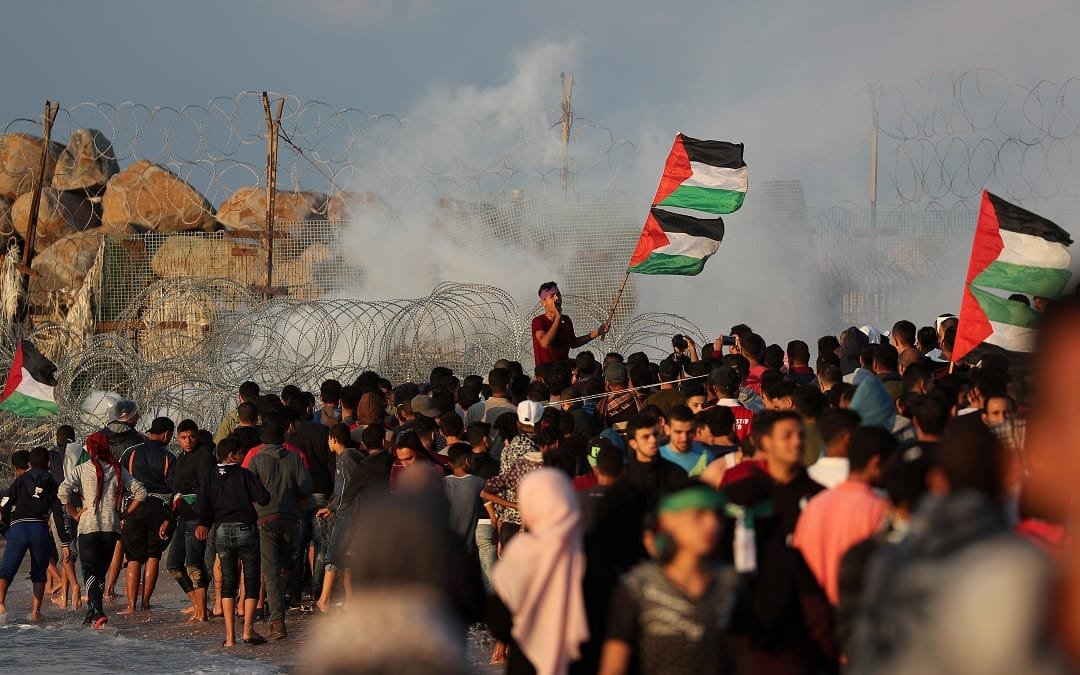
In Gaza City, shattered streets were alive with cautious optimism. Residents waved Palestinian flags and documented the scenes on their phones. Carts laden with household possessions weaved through debris-strewn streets, symbolizing resilience amidst the ruins.
Yet, for many like Ahmed Abu Ayham, a 40-year-old from Gaza City, the immense loss overshadowed any sense of relief. “The ceasefire may save lives, but it’s no time for celebration,” he said, standing among the remnants of his community.
