

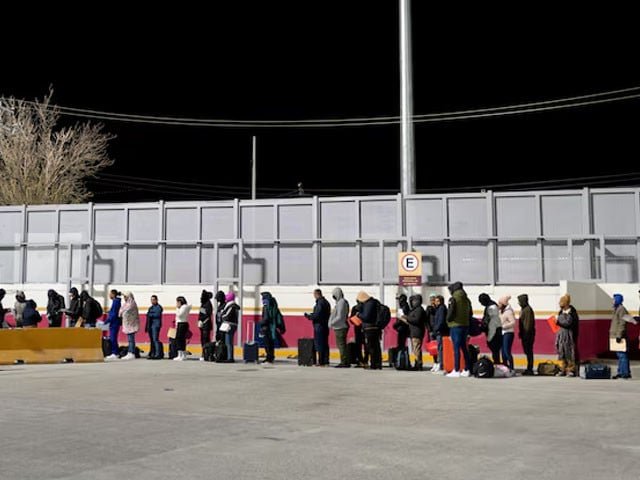

The United States has intensified its efforts to deport approximately 100,000 undocumented immigrants, following a strict policy crackdown initiated by President Donald Trump shortly after assuming office.
So far, over 2,000 undocumented individuals have been arrested and sent back to their home countries, fueling anxiety and fear among immigrant communities nationwide. Current estimates suggest that nearly 170,000 undocumented immigrants reside in the U.S., with Texas and California hosting significant portions of this population.
Texas, a state with strong Republican support, has seen the expansion of large detention centers designed to temporarily house undocumented individuals awaiting deportation. The construction of a border wall along the Texas-Mexico boundary, a controversial project paused after Trump’s previous term, has also resumed.
The impact of these policies extends beyond undocumented immigrants, creating a climate of uncertainty for individuals living in the U.S. legally on various visa types.
A recent incident in Fort Worth exemplifies the rising tensions. A substitute teacher reportedly invited Immigration and Customs Enforcement (ICE) agents to his school, alleging that many of his students were non-English speakers. This action sparked widespread criticism and led to an investigation by the school district.
Immigrants, particularly from Mexico, have long been a vital part of Texas’ economy, especially in sectors like construction. Reports indicate that immigrants make up over one-third of the state’s construction workforce. The recent crackdown has disrupted these communities, leaving both legal and undocumented immigrants uncertain about their futures.
The ongoing policies have drawn criticism for their broad scope and the fear they have instilled among immigrant populations, underscoring the profound social and economic impact of these enforcement measures.
