


Judiciary Dispute
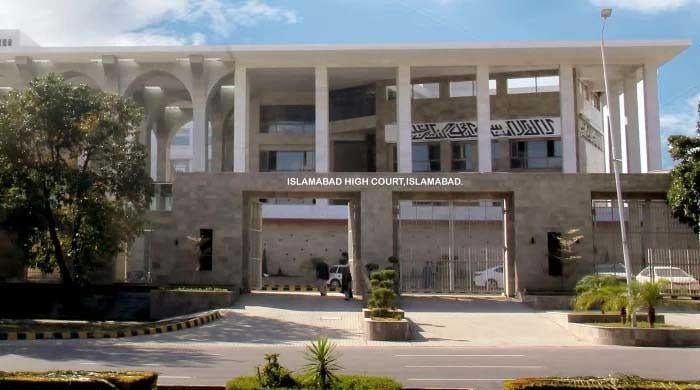
Lahore High Court’s (LHC) Justice Muhammad Sarfraz Dogar is among three judges transferred to the Islamabad High Court (IHC), amid growing speculations that the next chief justice of the IHC could be chosen from among these relocated judges.
This move has sparked debate within the judiciary, as concerns rise over its implications for judicial independence and established norms.
According to an official notification issued by the Ministry of Law and Justice, Justice Dogar, along with Justice Khadim Hussain Soomro from the Sindh High Court and Justice Muhammad Asif from the Balochistan High Court, has been reassigned to the federal territory’s court.
The notification further stated that the transfers were approved by President Asif Ali Zardari under the powers conferred upon him by Clause (1) of Article 200 of the Constitution.
This decision came just a day after five sitting IHC judges formally raised concerns over media reports suggesting that a “transferred judge” was being considered for the chief justice position of the IHC.
The five judges—Justices Mohsin Akhtar Kayani, Tariq Mehmood Jahangiri, Babar Sattar, Sardar Ejaz Ishaq Khan, and Saman Rafat Imtiaz—penned a letter to Chief Justice of Pakistan (CJP) Yahya Afridi, IHC Chief Justice Aamer Farooq, LHC Chief Justice Aalia Neelum, and Sindh High Court Chief Justice Mohammad Shafi Siddiqui. While the names of Justices Arbab Muhammad Tahir and Miangul Hassan Aurangzeb were included in the letter, their signatures were notably absent.
The controversy comes at a crucial time, as incumbent IHC Chief Justice Aamer Farooq is being considered for elevation to the Supreme Court. The Judicial Commission of Pakistan (JCP) is scheduled to meet on February 10 to select eight judges from five different high courts for higher judicial appointments.
Traditionally, the most senior puisne judge of a high court is elevated to the position of chief justice. However, with the introduction of new rules by the JCP following the enactment of the 26th Amendment, the appointment process has undergone a shift.
The new framework allows for the selection of a chief justice from a panel of the five most senior judges of a high court, rather than strictly following the seniority principle.
In their letter, the IHC judges urged CJP Yahya Afridi not to advise the President to proceed with such transfers, arguing that it would be unconstitutional for a transferred judge to be considered for the position of chief justice at the IHC.
The letter emphasized that a judge who is permanently transferred to another high court must take a fresh oath under Article 194 of the Constitution, which would reset their seniority to the date of the new oath.
The judges further stated that appointing a transferred judge as the chief justice of IHC would violate the spirit of the Constitution, undermine judicial independence, and set a dangerous precedent that could have long-term consequences. They described the move as unjustifiable and warned that it could result in a legal and constitutional crisis within the judiciary.
The controversy has also extended beyond the judiciary, as lawyers in Islamabad have voiced strong opposition to the idea of appointing an IHC chief justice from another high court.
The Islamabad High Court Bar Association and the Islamabad Bar Association have jointly issued a statement demanding that only a judge from within the IHC should be considered for the position.
The statement, issued by Presidents Riasat Ali Azad and Naeem Ali Gujjar, warned authorities that any deviation from this demand could result in a nationwide protest led by the legal fraternity.
With tensions escalating, the judicial and legal communities remain on edge as the matter unfolds, highlighting deep-seated concerns about judicial appointments, independence, and procedural integrity within Pakistan’s legal system.
