

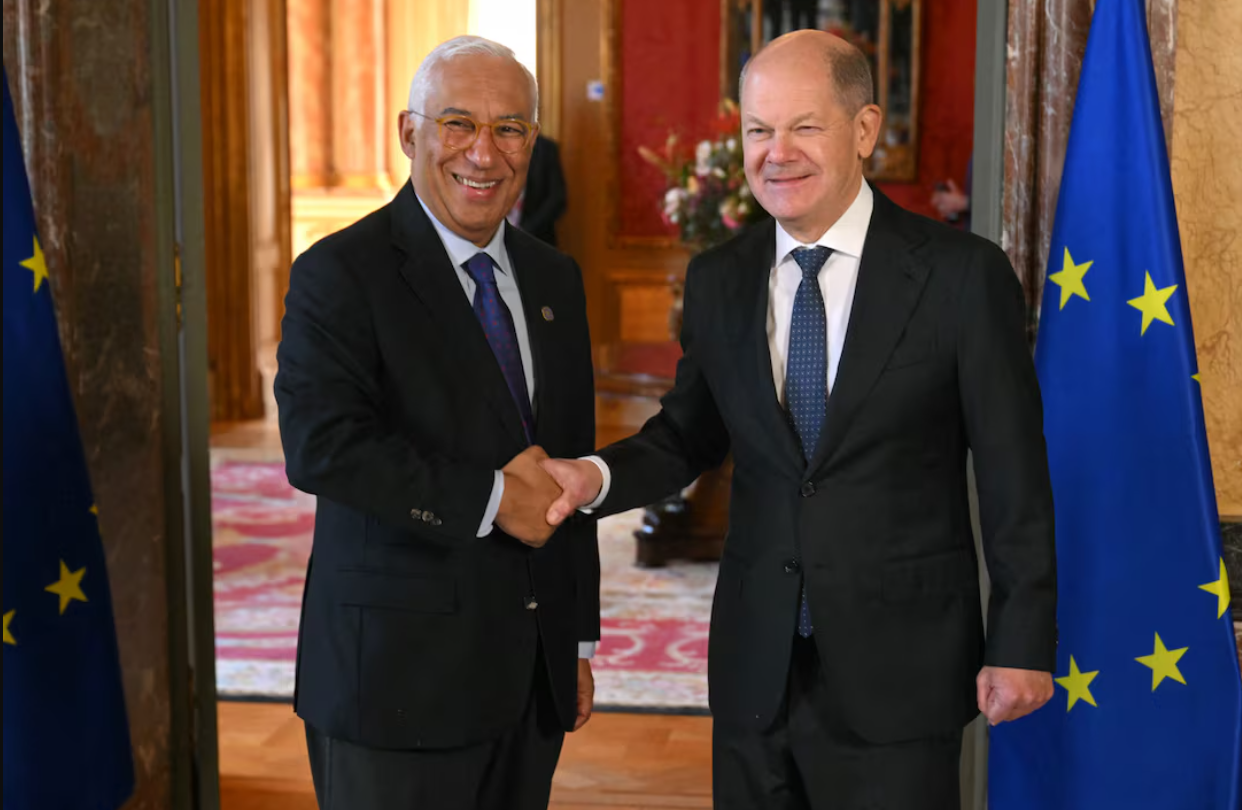

European Union leaders have gathered in Brussels to deliberate on strengthening the continent’s defence against Russia and formulating a strategy to address US President Donald Trump’s decision to impose tariffs on imports from Canada, Mexico, and China.
The meeting, held at a former royal palace turned conference centre, brings together the heads of the EU’s 27 nations. They will also hold discussions over lunch with NATO Secretary General Mark Rutte and later dine with British Prime Minister Keir Starmer.
Antonio Costa, President of the European Council, has framed the gathering as a “retreat” rather than a formal summit, aiming for open dialogue without issuing any official statements or resolutions. The initial session is dedicated to geopolitics and transatlantic relations, where Trump’s latest trade policies are expected to be a major point of discussion. EU officials fear that European exports could soon face similar tariff measures.
Trump, who began his second term on January 20, remains a pivotal factor in European defence talks. He has repeatedly urged EU nations to increase their own defence spending and reduce reliance on NATO and the United States. His controversial call for Denmark to cede Greenland to the US—along with suggestions that economic pressure or military action could be used to enforce the demand—has further strained relations between Washington and Brussels.
Strengthening EU Defence Capabilities
EU leaders are set to examine the military capabilities required in the coming years, potential funding strategies, and opportunities for collaboration on joint defence projects.
“Europe must take greater responsibility for its own security,” Costa wrote in a letter to EU leaders. “We need to be more resilient, more efficient, and more autonomous in defence matters.”
Challenges in Defence Funding
The discussion on funding is expected to be challenging, as many EU nations have limited fiscal space for significant defence budget increases.
France and the Baltic states support joint EU borrowing to finance defence initiatives, but Germany and the Netherlands remain opposed to such measures. A possible compromise being considered involves issuing loans rather than direct grants for defence projects.
Spanish Economy Minister Carlos Cuerpo emphasized the need for a unified EU stance against Trump’s tariff threats. He reaffirmed the EU’s commitment to free trade but stressed that the bloc must protect its industries and ensure fair competition.
EU Defence Spending Trends
Since Russia’s 2022 invasion of Ukraine, European countries have significantly increased their defence budgets. However, Trump has now called for NATO’s European members to allocate at least 5% of their GDP to defence—an ambitious target that no member, including the US, currently meets.
In 2024, EU nations collectively spent an average of 1.9% of GDP on defence, amounting to approximately 326 billion euros ($334.48 billion), reflecting a 30% rise since 2021. However, spending varies widely across the bloc.
Poland leads with over 4.1% of its GDP allocated to defence, followed closely by the Baltic states. Meanwhile, some of the EU’s largest economies, including Italy and Spain, allocate significantly lower percentages—around 1.5% and 1.3%, respectively.
As European leaders seek greater security autonomy, discussions on defence cooperation and financial mechanisms will be crucial in shaping the future of EU security policy.
