

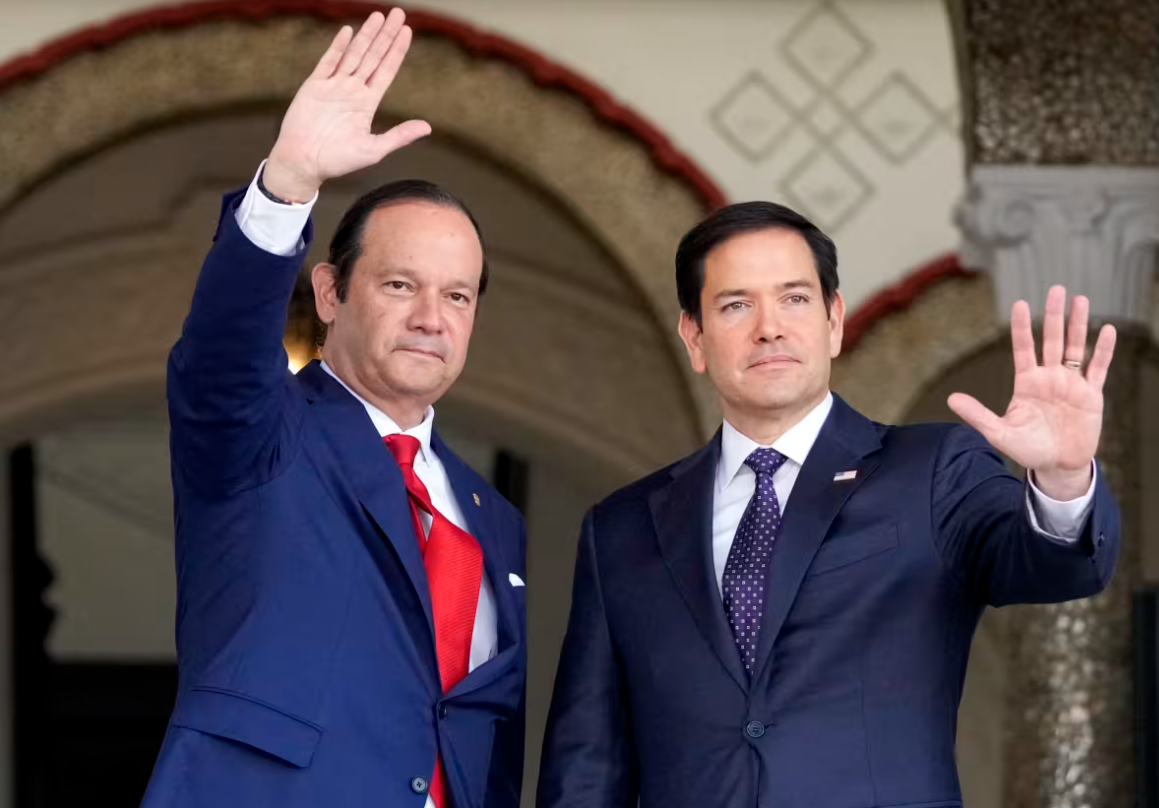

Panama has decided to terminate a key development agreement with China and deepen its partnership with the United States, marking a strategic shift in its foreign policy. The decision follows a visit by U.S. Secretary of State Marco Rubio, who met with Panamanian President José Raúl Mulino to discuss bilateral relations.
President Mulino reaffirmed Panama’s sovereignty over the Panama Canal, emphasizing that the country would not renew its 2017 memorandum of understanding under China’s Belt and Road Initiative (BRI). Instead, Panama will focus on expanding collaboration with the U.S. in areas such as investment, security, and trade. He expressed confidence that closer ties with Washington would bring increased economic opportunities and strengthen regional stability.
Following his visit, Secretary Rubio stated on X (formerly Twitter) that the U.S. is committed to preventing China from gaining further influence over the canal. This echoes previous concerns raised by former U.S. President Donald Trump, who warned that Chinese involvement in the canal could lead to unfair shipping fees and strategic disadvantages for U.S. vessels.
The move is part of a broader U.S. initiative to counter China’s global influence. In Congress, House Republicans have introduced a bill proposing that the U.S. repurchase the Panama Canal, citing its critical role in global trade and national security. The bill highlights that 72% of ships passing through the canal are linked to U.S. trade, and its accessibility is vital for the U.S. military, Coast Guard, and economic interests. Without access, ships would be forced to take an 8,000-mile detour around South America.
Beyond the canal, discussions between Rubio and Panamanian officials also covered efforts to manage migration in the Western Hemisphere and ensure fair competition for American businesses in Panama’s economy.
