

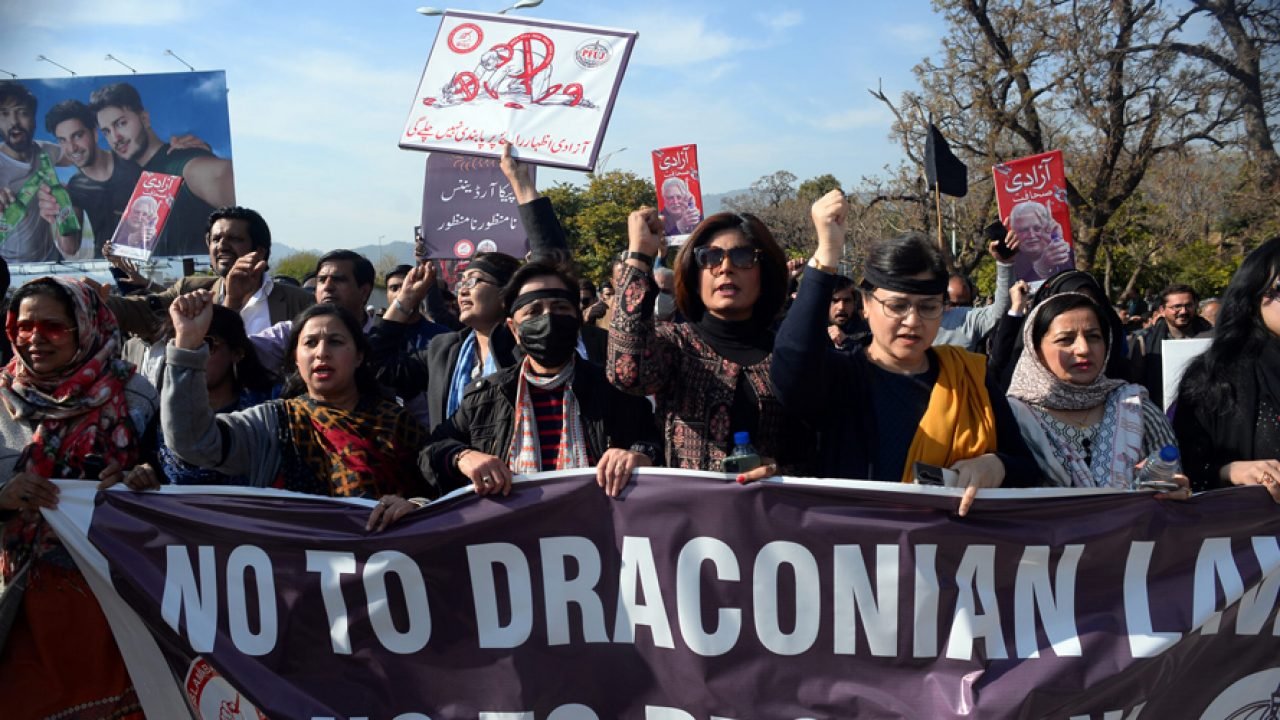

ISLAMABAD: Pakistan Federal Union of Journalists (PFUJ) challenged the controversial Prevention of Electronic Crimes (Amendment) Act, 2025 (Peca law) in the Islamabad High Court (IHC).
The case was filed by PFUJ President Afzal Butt, through Advocate Imran Shafique, who argued that the law was an attack on media freedom.
The petition claimed that the Peca (Amendment) Act was unconstitutional and illegal, urging the court to conduct a judicial review of the legislation.
The ruling coalition quickly passed the contentious amendments to the already controversial Peca law in both the National Assembly and the Senate. Opposition parties, journalists, and media organizations have criticized the lack of consultation and raised concerns over the provisions.
In its petition, the journalists’ body argued that the Peca (Amendment) 2025 increases government control and imposes further restrictions on freedom of speech. They contended that the law violates Articles 19 and 19(A) of the Constitution, calling for its suspension.
The petition further stated that the amendments grant the government unlimited censorship powers, criminalizing fake news without due process, which is unconstitutional and infringes on media freedom.
Additionally, the PFUJ claimed that the law violates international human rights and digital rights in Pakistan.
The petition requested that the court declare the Prevention of Electronic Crimes (Amendment) Act, 2025, unconstitutional, as it violates fundamental rights, due process, fair trial, and the concept of regulatory independence. The PFUJ called for the law to be struck down and for the respondents to be restrained from using the law’s coercive powers, especially against the journalist community, until the petition is resolved.
Speaking to the media in Islamabad, Advocate Shafique emphasized that the law restricts media freedom, with the government attempting to suppress freedom of expression. He also highlighted the lack of a clear procedure for dealing with fake information, warning that the police could arrest anyone under a cognizable offense, which could lead to years of legal battles.
The law, which has now come into effect after receiving assent from President Asif Ali Zardari, introduces new definitions, establishes regulatory and investigative bodies, and enforces stricter penalties for spreading “false” information.
