

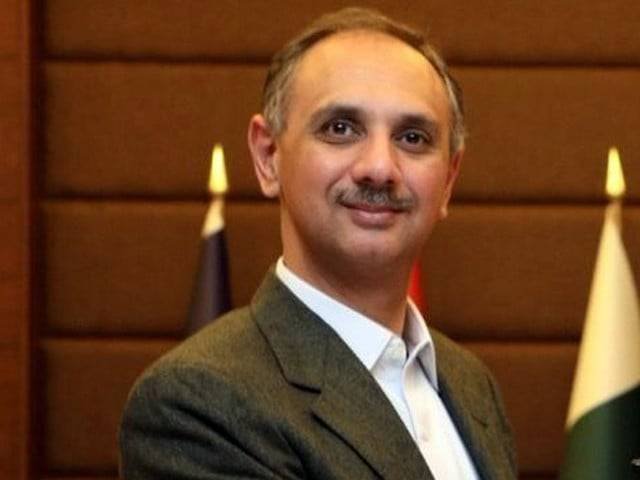

Pakistan Tehreek-e-Insaf (PTI) leader and National Assembly Opposition Leader Omar Ayub Khan has dismissed the possibility of resuming negotiations between his party and the government, stating that the dialogue process has come to an end.
“The chapter of talks is now closed,” Ayub asserted on Saturday, emphasizing that political negotiations require firm commitments rather than mere intentions—something he accused the government of failing to provide.
Criticizing the coalition government’s approach, Ayub claimed that PTI had engaged in discussions in good faith, but the ruling side neither showed sincerity nor demonstrated a genuine willingness to move forward, resulting in a deadlock.
His statement follows the stalled negotiations between PTI and the government, which began in late December amid heightened political tensions. Despite holding three rounds of talks, both sides failed to reach any substantial progress.
PTI had submitted a written charter of demands but refused to attend the fourth session, citing the government’s failure to establish a judicial commission to investigate the May 9 riots and the November 2024 protests.
With the talks in limbo, PTI has hinted at renewed agitation, recently holding a rally in Swabi, Khyber Pakhtunkhwa, on Saturday to mark ‘Black Day’ in protest against alleged electoral rigging in last year’s general elections.
Meanwhile, a spokesperson for the National Assembly clarified that Speaker Ayaz Sadiq had not extended a formal invitation to PTI for negotiations. Instead, he merely stated that, as the House’s custodian, his doors remain open to all members.
Responding to Ayub’s remarks, the spokesperson explained that a formal invitation for dialogue would only be issued if requested by either the government or the opposition. He reiterated that the speaker’s role is limited to facilitating talks and that both his office and residence remain accessible to lawmakers.
Echoing Ayub’s sentiments, Pakistan Muslim League-Nawaz (PML-N) Senator Irfan Siddiqui also noted that the government’s negotiation committee had become “practically non-functional and ineffective.”
In a statement, he said that regardless of whether the committee was formally dissolved, it was no longer operational, attributing this to PTI’s unilateral withdrawal from the talks and rejection of the prime minister’s offer to reconsider its stance.
Siddiqui accused PTI of resorting to “violent protests” instead of constructive engagement. However, he suggested that if PTI decides to return to the negotiating table in the future, the government may reassess its position.
Meanwhile, PTI Chairman Barrister Gohar Ali Khan clarified that the party was not seeking any foreign intervention, including from the United States, for the release of its founder, Imran Khan.
“We are not asking any country, including the US, for Khan’s release. He has not made any deal and will not make one.
“As Khan himself has stated, we are negotiating not for a deal, but for Pakistan and democracy,” Gohar emphasized in his statement.
