


BRICS Currency Initiative
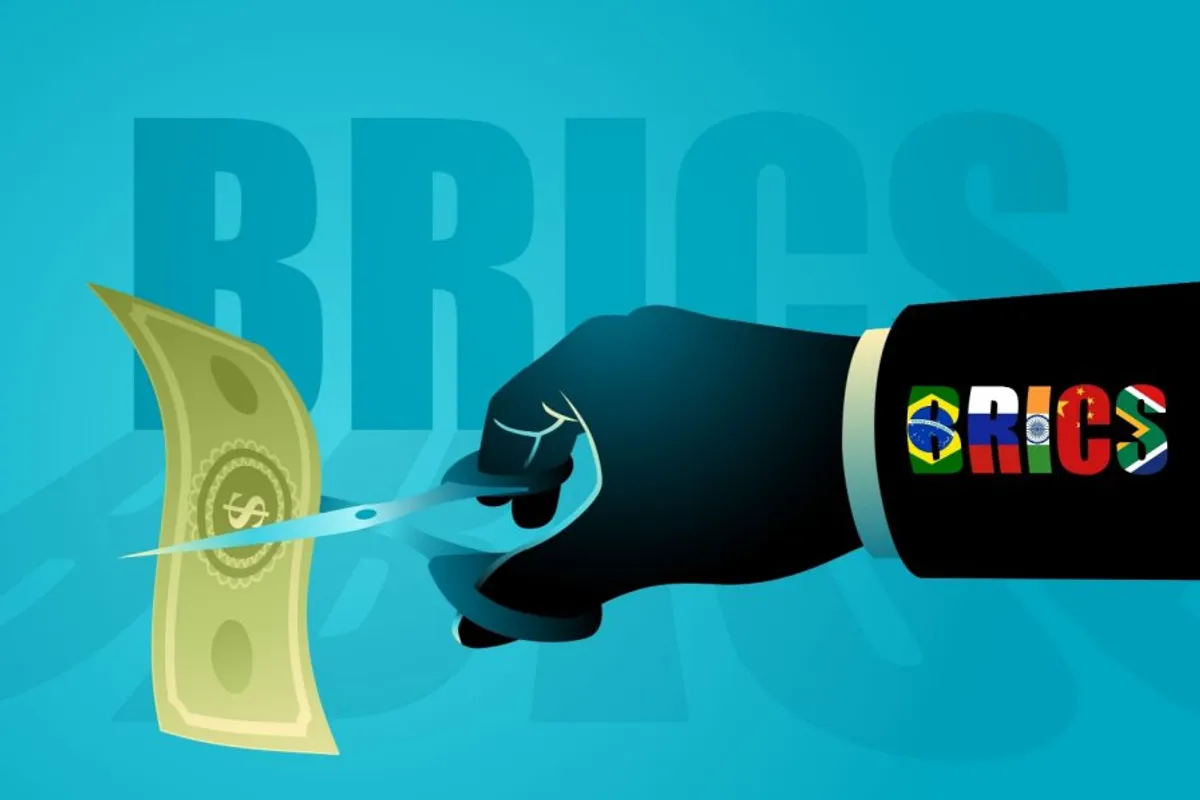
Brazil, which holds the BRICS presidency this year, will not be advancing the proposal for a common currency among the bloc’s major developing economies, according to four government officials. However, its agenda is likely to promote steps toward reducing global reliance on the US dollar in trade and financial transactions.
The decision comes amid growing discussions on de-dollarization, a move that could potentially draw the ire of former US President Donald Trump. Trump has issued multiple warnings in recent months against any attempts by the BRICS nations—Brazil, Russia, India, China, and South Africa—to challenge the dominance of what he called “the mighty US dollar.”
“There is no chance that BRICS will replace the US dollar in international trade, or anywhere else, and any country that tries should say hello to tariffs, and goodbye to America!” Trump wrote on social media last month.
Despite earlier discussions about a shared BRICS currency, Brazilian officials, who spoke on the condition of anonymity, confirmed that such a proposal has not been formally discussed at the technical level.
Instead, Brazil is focusing on reforms aimed at facilitating international payments in local currencies. While this approach could lessen dependence on the US dollar, officials emphasized that this is not the primary goal.
“It’s not directed against anyone,” one source stated, explaining that the main objective is to reduce trade barriers and make global transactions smoother.
As part of this effort, BRICS nations are exploring financial technologies such as blockchain and looking into ways to integrate their payment systems. By following global standards set by institutions like the Bank for International Settlements (BIS), they hope to cut transaction costs and improve the efficiency of cross-border payments.
“No one wants to create trouble, but BRICS countries also don’t want to abandon the idea of exploring these possibilities,” another source noted, adding that none of the member states intend to completely replace their dollar reserves.
Even Brazilian President Luiz Inácio Lula da Silva, who had previously floated the idea of a shared BRICS currency, has tempered his stance. While still advocating for economic independence, he recently clarified that the goal is not to eliminate the dollar but rather to expand trade options for BRICS nations.
Brazil’s Finance Ministry and central bank have been actively working on proposals related to international payment mechanisms, which were discussed during recent BRICS presidency meetings. However, neither institution has provided an official statement on the matter.
BRICS Summit and Payment Innovations
BRICS representatives are set to meet in South Africa this month on the sidelines of the G20 meetings, where Brazil will outline its agenda for the BRICS summit in July. The BRICS bloc, originally formed in 2009, has expanded over the years to include South Africa and more recently Egypt, Ethiopia, Indonesia, Iran, Saudi Arabia, and the United Arab Emirates. The inclusion of these countries has strengthened BRICS as a growing diplomatic and economic counterweight to Western powers.
Brazil’s leadership in digital payments has positioned it at the forefront of discussions on financial innovation. The country’s instant payment system, Pix, launched in 2020, has revolutionized transactions, surpassing the use of cash, credit, and debit cards.
Brazil’s new central bank chief, Gabriel Galipolo, highlighted that Pix was designed with the potential for easy integration with other international payment systems. However, he acknowledged that governance challenges remain a key hurdle.
Brazil also operates a Local Currency Payment System (SML), which allows direct settlements in Brazilian reais through agreements with Argentina, Uruguay, and Paraguay. By bypassing the dollar as an intermediary, this system reduces foreign exchange contract requirements and lowers transaction costs. However, it currently takes at least three business days for settlements, limiting its adoption.
In 2023, Argentina was the top trade partner using the SML system, with transactions amounting to 5.1 billion reais ($878 million). However, this remains a small portion of the $27.4 billion in total bilateral trade between the two nations.
Officials believe that advancements in instant payment technologies could improve the system, making cross-border transactions faster, more secure, and cost-effective.
As Brazil takes the lead in BRICS discussions this year, its focus will remain on financial innovation and trade facilitation rather than pushing for a common currency. The country’s agenda reflects a strategic approach to modernizing global payments while balancing diplomatic ties with major economic powers.
