

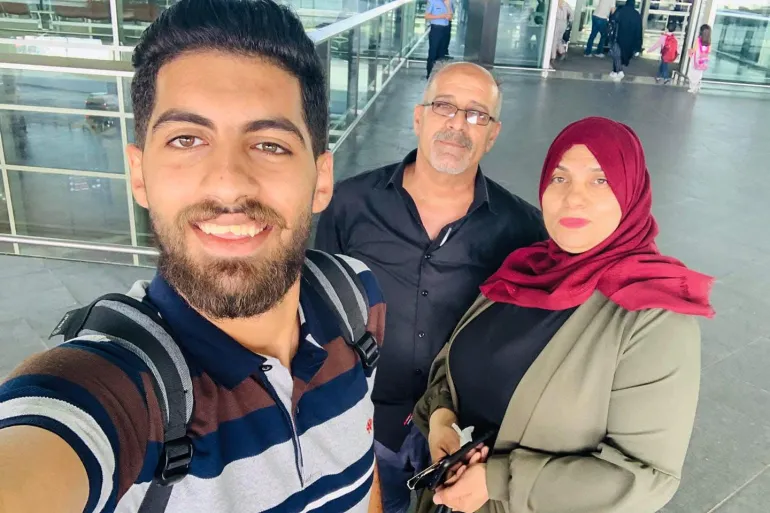

Essam Awad’s son, Muhammed, was shot dead at just 20 years old. Though he had been studying in Turkey, he visited his family in the Far’a Refugee Camp. Despite his family’s pleas to stay away, he went, only to lose his life. His father, Essam, who tried to remain in the home Muhammed was raised in, was ultimately forced out by Israeli soldiers.
On that fateful Friday, heavy rain did little to deter the pounding of Israeli soldiers’ boots against the doors of homes across the camp. As soldiers smashed doors and shouted in Hebrew, fear gripped the inhabitants. Families scrambled to gather what they could while soldiers barked orders, moving methodically through the narrow streets, ordering families out at gunpoint.
Essam, a retired employee of the Ministry of Tourism, watched in horror as soldiers broke into his home. Despite his refusal to leave, he was beaten and driven out of his house. “I built this house in stages as my family grew,” he recalls, “But when my son died, it became colder. When the soldiers came, it turned to ice.”
Far’a, located in the Jordan Valley, has long been a target of Israeli encroachment. The residents, most of whom were displaced from 30 villages near Jaffa during the Nakba, have endured increasing Israeli military activity. The current escalation, “Operation Iron Wall,” has displaced thousands, and Israeli forces have carried out an extensive blockade on the camp, cutting off essential supplies and aid.
In a series of harrowing events, more than 3,000 out of 9,000 residents of Far’a were displaced at gunpoint. The camp is now a shadow of its former self. Its narrow, once-bustling streets are now choked with mud and debris, as bulldozers tear through homes and infrastructure.
Essam’s home, which had been a center of joy and warmth for his large family, now stands abandoned. He recalls the laughter, the gatherings, the weddings, and the celebrations that once filled the space, now reduced to rubble and empty walls marked by bullet holes. Despite his grief, Essam remains resilient. “No matter how much they take from us, we will survive,” he says, “You grow too immune after that much pain.“
