

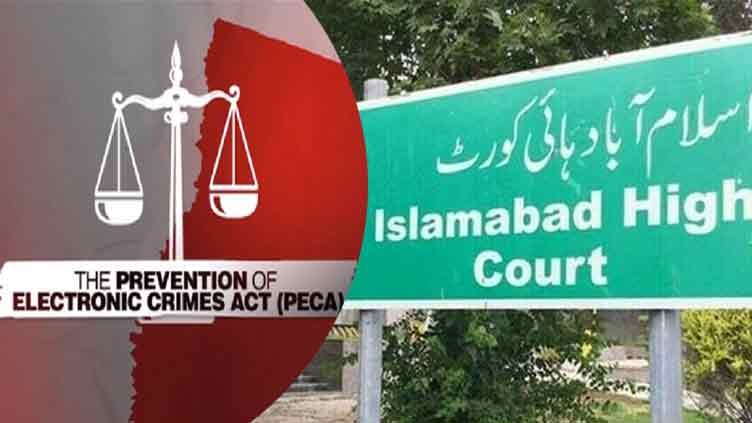

IHCJA Calls Peca Amendments an Attack on Press Freedom, Seeks Judicial Review. The Islamabad High Court Journalists Association (IHCJA) filed a petition on Monday challenging the government’s recent amendments to the controversial Prevention of Electronic Crimes Act (Peca) in the Islamabad High Court.
The petition argues that the Peca Amendment Act represents an “attack on press freedom” and requests judicial review. The petitioner’s lawyer also called for the formation of a larger bench to hear the case.
The petition contends that the appointment of an authority and tribunal under Peca falls within the government’s jurisdiction, claiming that the Peca Amendment Act of 2025 violates Articles 19 and 19A of the Constitution. It further asserts that the law grants the government unchecked powers of censorship, severely infringes on digital rights, and argues that the regulatory authority under Peca lacks constitutional legitimacy.
Acting Chief Justice Sarfaraz Dogar of the IHC directed that the case be connected with other pending petitions before Justice Inam Amin Minhas. He also indicated that Justice Minhas would decide whether to form a larger bench to hear the matter.
During the hearing, the Acting Chief Justice inquired about the case schedule, to which Advocate Mian Samiuddin responded that the case before Justice Minhas had been postponed for two weeks.
This legal action follows the government’s passage of the amendments to Peca in the National Assembly and Senate, which were pushed through without consultation with opposition parties, journalists, or media organizations. These groups have strongly criticized the amendments for their lack of inclusivity in the legislative process.
The amendments to Peca, now in effect after receiving President Asif Ali Zardari’s assent, introduce new definitions, the creation of regulatory and investigative bodies, and stricter penalties for disseminating “false” information. The law lowers the punishment for spreading “fake information” online to a maximum of three years in prison, along with a fine of up to Rs2 million.
The amendments also propose the creation of the Social Media Protection and Regulatory Authority (SMPRA), the National Cyber Crime Investigation Agency (NCCIA), and the Social Media Protection Tribunal. Under these changes, any individual “aggrieved by fake and false information” can approach the authority for removal or blocking of such content, with the authority required to issue a decision within 24 hours.
The new amendments also stipulate that social media platforms may be required to register with the authority and pay any prescribed fees. Furthermore, the amendments propose the establishment of a Social Media Complaint Council to address complaints related to violations of the cybercrime law.
The amendments also introduce the creation of Social Media Protection Tribunals, which would resolve cases within 90 days, with the option for appeals to be heard by the Supreme Court within 60 days.
