

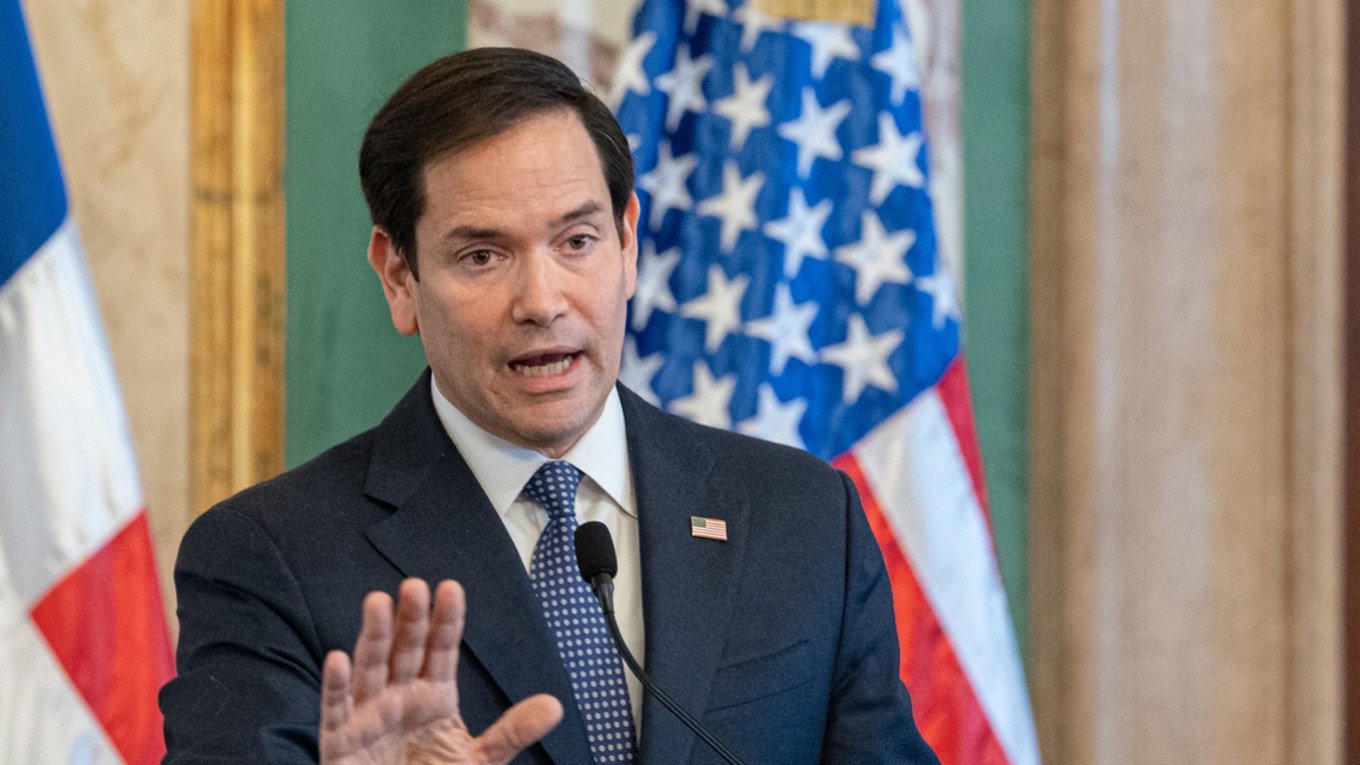

U.S. Secretary of State Marco Rubio dismissed claims that the Trump administration was yielding to Russia ahead of peace talks on the Ukraine war, emphasizing that Washington first needs to assess Moscow’s commitment to ending the conflict.
“President Donald Trump wants this war to end. He wants to determine whether Russia is genuinely interested in a resolution or merely posturing,” Rubio stated in an interview published Thursday.
“The only way to know is by engaging with them—asking if they are serious about ending the war and understanding their demands,” he explained, while clarifying that he does not support most of Russian President Vladimir Putin’s actions.
Rubio stressed the necessity of dialogue, pointing out that Russia possesses one of the world’s largest stockpiles of tactical and strategic nuclear weapons.
On Tuesday, U.S. and Russian officials met in Saudi Arabia for their first direct discussions since Moscow’s February 2022 invasion. While both sides acknowledged the talks as positive, they tempered expectations of an immediate breakthrough.
During the meeting, Rubio and Russian Foreign Minister Sergei Lavrov agreed to form working teams to develop a plan aimed at ending the war in Ukraine “as soon as possible.”
Dismissing concerns that Ukraine and European allies were excluded, Rubio asserted, “It’s unfair to claim we did not consult anyone.” He added, “You can’t negotiate peace unless both sides and their perspectives are considered.”
Addressing rising tensions between Trump and Ukrainian President Volodymyr Zelensky, Rubio weighed in on Trump’s recent remark calling Zelensky a “dictator without elections” after the Ukrainian leader suggested Trump was influenced by Russian disinformation.
“President Trump is understandably frustrated with President Zelensky, and in some ways, justifiably so,” Rubio said, noting that even former President Joe Biden had experienced similar frustrations with Ukraine’s leadership.
Despite this, Rubio underscored the broader significance of the war, stating, “It affects our allies and has global consequences, even if it does not directly impact the daily lives of Americans.”
Expressing disappointment over Zelensky’s approach, Rubio remarked, “There should be some recognition of the support provided. When he instead accuses the president of being misled by disinformation, it becomes highly counterproductive.“
