

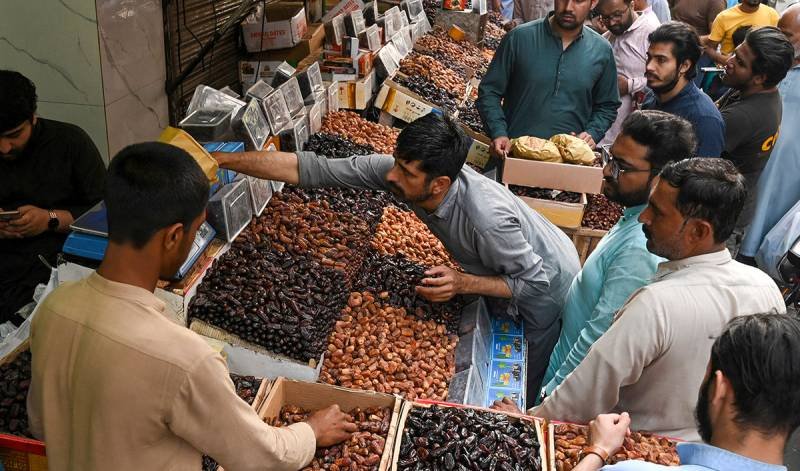

As the holy month of Ramazan begins, the prices of essential commodities have surged across major cities, making it increasingly difficult for citizens to afford basic food items.
Despite government assurances to curb inflation, profiteers and hoarders continue to manipulate the market, creating artificial shortages and driving up prices.
Price Control Measures Falling Short
In Punjab, price control magistrates have struggled to enforce regulations, with Lahore’s model bazaars failing to provide the intended relief. Consumers complain about both poor-quality products and inflated prices. Meanwhile, in Islamabad, fruit prices have spiked sharply in just a few days, further straining household budgets.
Punjab Chief Minister Maryam Nawaz has ordered an immediate crackdown on hoarders and profiteers, instructing commissioners and deputy commissioners to strictly monitor prices. She has emphasized transparent price displays, real-time tracking of supply and demand, and legal action against violators.
However, traders and vendors continue to flout official price lists, citing rising wholesale costs and supply chain disruptions. Consumers point out that while international markets offer Ramadan discounts, local retailers are pushing prices higher, making it increasingly difficult for low-income families to observe the holy month without financial hardship.
Rising Prices Across Major Cities
With inflation already at record levels, the government’s inability to regulate essential commodity prices raises concerns about its capacity to provide relief during this crucial period. If immediate action is not taken, unchecked profiteering will further burden struggling households nationwide.
In Karachi, fruits and vegetables are being sold at inflated rates, with bananas priced at Rs150 per dozen instead of the official Rs148, and golden apples retailing at Rs300 per kg against the approved Rs219. Hyderabad has seen similar trends, with vendors arbitrarily raising prices, making fresh produce unaffordable for many.
In Quetta, the much-publicized Ramazan Sasta Bazaar has failed to deliver promised relief. Many stalls remain empty, leaving shoppers disappointed as essential items continue to be sold at regular market rates instead of subsidized prices.
Frustrated consumers have voiced their dissatisfaction, urging authorities to take meaningful action to ensure genuine price relief during Ramazan.
