

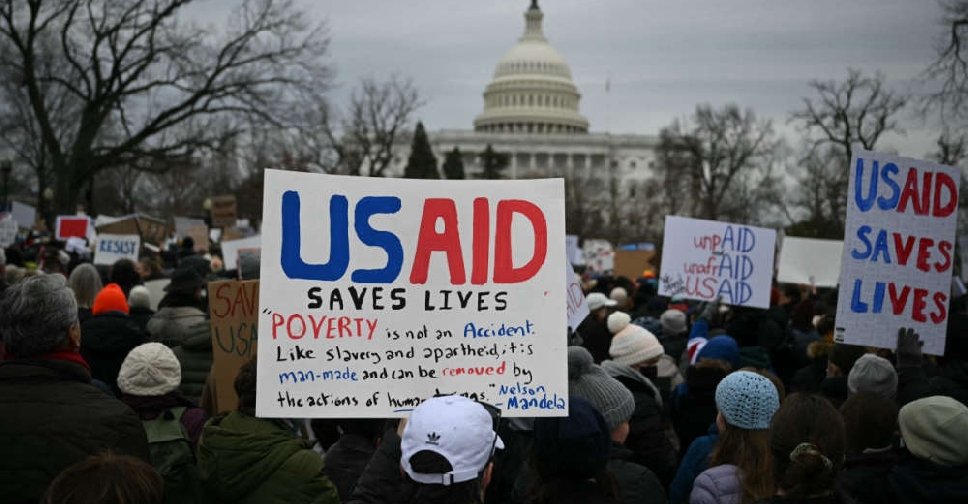

A divided U.S. Supreme Court on Wednesday rejected former President Donald Trump’s attempt to withhold payments to foreign aid organizations for work they had already completed under government contracts. The 5-4 ruling dealt a blow to Trump’s efforts to halt American humanitarian projects worldwide.
The court upheld an order by Washington-based U.S. District Judge Amir Ali, who had directed the administration to release funds to contractors and recipients of U.S. Agency for International Development (USAID) and State Department grants. Ali’s ruling had initially given the government until February 26 to distribute nearly $2 billion in aid payments, though officials warned the process could take weeks.
Chief Justice John Roberts and conservative Justice Amy Coney Barrett joined the court’s three liberal justices in forming the majority. Conservative Justices Samuel Alito, Clarence Thomas, Neil Gorsuch, and Brett Kavanaugh dissented.
Court Rejects Trump’s Appeal
Roberts had temporarily paused Ali’s order just hours before the February 26 deadline, allowing the Supreme Court time to consider Trump’s appeal. However, the court ultimately declined to block the ruling, instructing Ali to clarify the government’s obligations regarding compliance timelines.
Ali, who is overseeing the ongoing legal challenge to Trump’s policy, has scheduled a Thursday hearing at the plaintiffs’ request to consider a preliminary injunction. His temporary restraining order, which prevents the administration from withholding payments, remains in effect until March 10.
In his dissent, Justice Alito criticized the majority’s decision, arguing that a single district court judge should not have the power to force the federal government to pay out such a large sum.
“Does a single district court judge who likely lacks jurisdiction have the unchecked power to compel the government of the United States to pay out (and probably lose forever) $2 billion in taxpayer dollars? The answer to that question should be an emphatic ‘No,’ but a majority of this court apparently thinks otherwise,” Alito wrote. “I am stunned.”
Humanitarian Aid in Crisis
Trump, who has prioritized an “America First” foreign policy, ordered a 90-day freeze on all foreign aid immediately upon resuming office on January 20. The move led to stop-work orders that disrupted USAID operations globally, delaying food and medical assistance and throwing humanitarian relief efforts into disarray.
Aid organizations sued Trump, arguing that he exceeded his authority under federal law and the U.S. Constitution by unilaterally halting Congressionally approved funding and effectively dismantling an independent federal agency.
Among the plaintiffs challenging the policy are the AIDS Vaccine Advocacy Coalition, Journalism Development Network, international development firm DAI Global, and refugee assistance group HIAS.
With legal battles still ongoing, the future of U.S. foreign aid remains uncertain, as organizations scramble to continue their humanitarian missions in the face of political and financial instability.
