

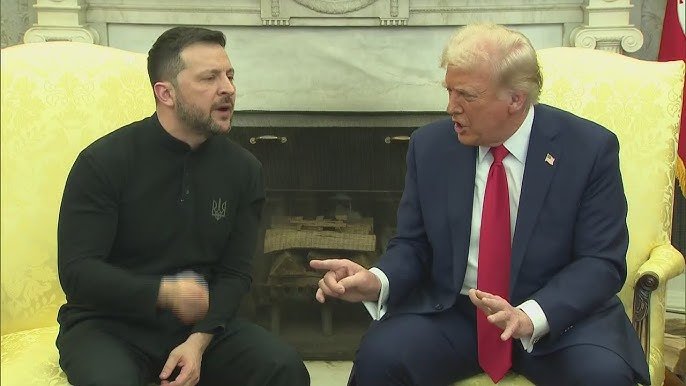

The administration of U.S. President Donald Trump is set to revoke temporary legal status for approximately 240,000 Ukrainians who sought refuge in the country after Russia’s invasion, according to a senior official and three sources familiar with the decision. This shift, expected as early as April, marks a sharp reversal from the policies of the previous administration, which had extended protections to Ukrainian refugees.
The move is part of a broader effort to dismantle temporary humanitarian parole programs that granted legal status to over 1.8 million migrants under the previous administration. The rollback had already been in progress before Trump’s recent public dispute with Ukrainian President Volodymyr Zelenskiy.
A spokesperson for the U.S. Department of Homeland Security stated that there were no official announcements at this time. Requests for comment from the White House and the Ukrainian embassy remained unanswered.
A January 20 executive order issued by the Trump administration directed the Department of Homeland Security (DHS) to terminate all categorical parole programs. In line with this policy, the administration is also preparing to revoke parole for approximately 530,000 migrants from Cuba, Haiti, Nicaragua, and Venezuela as soon as this month, sources revealed. Reports indicate that migrants who lose their parole status could be placed into expedited deportation proceedings.
Under existing regulations, migrants who cross the border unlawfully can be subjected to fast-track deportation for up to two years following their arrival. However, those who entered legally through designated ports of entry under parole status may face immediate removal without a time restriction.
The previous administration had introduced these parole programs as a means of deterring illegal migration while offering humanitarian relief. In addition to the 240,000 Ukrainians, more than 70,000 Afghans who fled after the Taliban’s return to power, as well as around one million migrants who scheduled border crossings through a dedicated application, were beneficiaries of these programs. Smaller parole initiatives also allowed limited numbers of migrants from Latin America and the Caribbean to enter the U.S. under family reunification programs.
During his campaign, Trump had pledged to dismantle these programs, arguing that they exceeded legal limits.
The recent policy changes have left many migrants in uncertain circumstances. Among them is Ukrainian national Liana Avetisian, who fled Kyiv in May 2023 with her husband and daughter. The family settled in DeWitt, Iowa, where Avetisian found work in window assembly while her husband took on construction jobs. With their parole and work permits set to expire in May, they have spent thousands of dollars filing applications for renewal and exploring alternative pathways such as Temporary Protected Status.
“I don’t know what to do,” Avetisian said, expressing concern over their future.
The administration’s crackdown has also affected Afghan allies of the U.S. military. Rafi, a former Afghan intelligence officer who assisted American forces, legally entered the U.S. in January 2024 through a border crossing app. Granted temporary humanitarian parole, he was allowed to work and live in the U.S. for two years.
However, just over a year into his stay, Rafi was detained during a routine check-in with immigration authorities. His parole status was revoked, and he was taken into custody. A former U.S. officer who trained Rafi had described him as a dedicated ally at great personal risk due to his intelligence work against high-value targets in Afghanistan.
From a detention facility, Rafi expressed his sense of betrayal. “I stood shoulder to shoulder with American troops and risked my life,” he said. “I never expected this.”
His lawyer appealed for his release, citing his clean record, compliance with legal procedures, and an ongoing asylum case linked to his service with U.S. forces. However, the request was denied, with an official stating that previous humanitarian priorities had ended with the new administration’s policies on January 20.
