

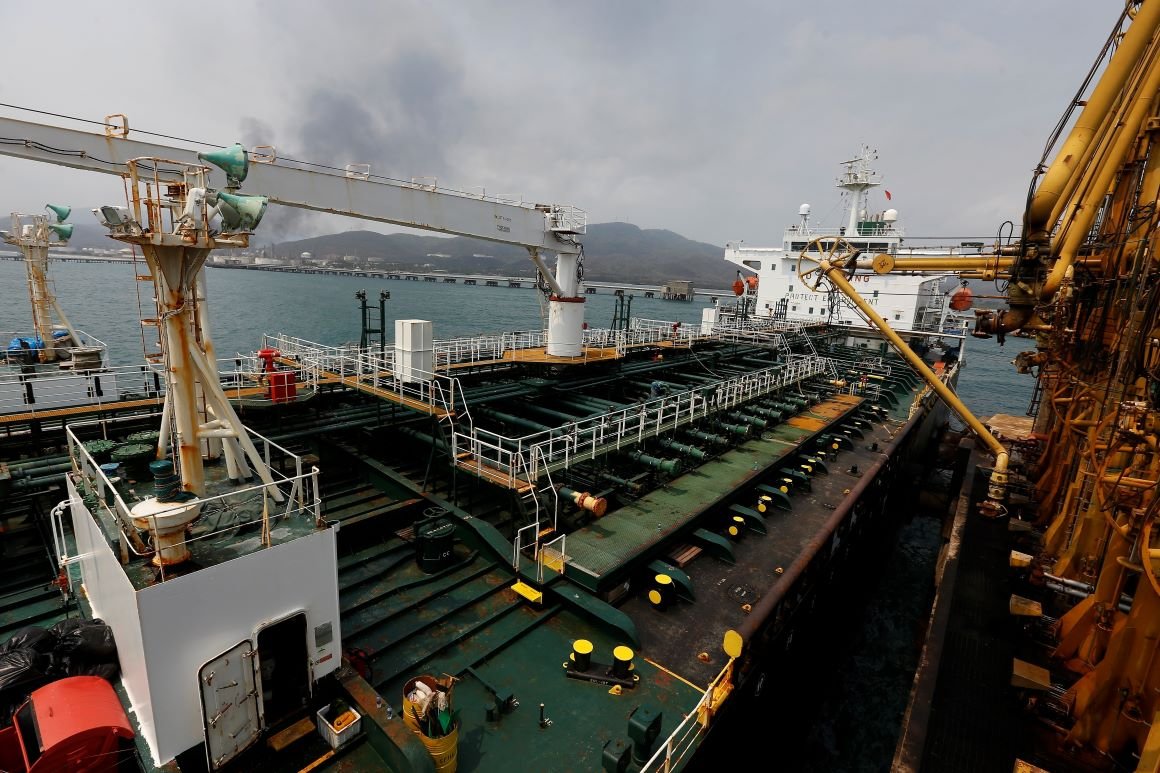

The latest round of U.S. sanctions has disrupted Iran’s oil trade by reducing the number of non-sanctioned tankers available for transport. However, Iranian crude exports to China remain steady, with traders and middlemen adapting by rerouting shipments and increasing ship-to-ship (STS) transfers, particularly off the coast of Malaysia.
Despite Washington’s efforts to cut off Iran’s oil revenue, China—accounting for approximately 90% of Iran’s crude exports—continues to purchase Iranian oil. Independent refiners, known as “teapots,” are key buyers, benefiting from discounted prices on sanctioned crude.
The U.S. “maximum pressure” campaign, first initiated by former President Donald Trump and recently reinforced, aims to halt Iran’s oil exports, including those to China. However, Beijing does not recognize U.S. sanctions and has been working to bypass restrictions.
According to vessel-tracking data, sanctioned Iranian oil flows to China stabilized in February, with shipments arriving at ports such as Dalian, Shanghai, Zhoushan, and Huizhou. Shandong, a major hub for independent refiners, saw increased imports following STS transfers. At least eight newly activated supertankers have been used for Malaysia-to-China operations.
Although recent U.S. measures have further restricted Iran’s access to tankers, Tehran remains in competition with Russia and Venezuela for vessels not yet blacklisted by the U.S. Treasury. The Biden administration has vowed to escalate pressure, recently sanctioning additional tankers and traders involved in Iranian oil shipments.
“The United States will use all available tools to target Iran’s oil supply chain, and those engaging in Iranian oil trade risk significant sanctions,” Treasury Secretary Scott Bessent stated.
While Iran’s oil exports have not collapsed, analysts suggest they will not be entirely eliminated. Some trade will persist despite restrictions, as sanctions are designed to make transactions more difficult rather than impossible.
The U.S. has also intensified efforts to block Iran’s financial transactions related to oil exports. Washington has warned regional governments and financial institutions aiding Tehran that they, too, could face sanctions.
“We will cut off Iran’s access to international financial networks and shut down its oil sector and drone production capabilities,” Bessent said in a recent address at the Economic Club of New York.
