


Panama Canal Access
The Pentagon is reportedly considering military options to secure US access to the Panama Canal, following a directive from the White House under President Donald Trump.
According to a Reuters report, a US official, speaking anonymously, revealed that an interim national security guidance document from the Trump administration instructed the US military to explore strategies to safeguard American military and commercial access to the strategically vital waterway.
The Panama Canal, which connects the Pacific Ocean with the Caribbean Sea and the Atlantic Ocean, has been a point of geopolitical tension since Trump assumed office.
The canal, built and operated by the US in the early 20th century, was handed over to Panama in 1999 as part of a treaty signed in 1979 during President Jimmy Carter’s administration. However, the treaty allows the US to take unilateral action to defend the canal’s neutrality if it is threatened.
In response to the reports, Panama’s Foreign Minister Javier Martinez-Acha asserted that Panama would firmly defend its sovereignty and the canal. “Let it be clear, the canal belongs to the Panamanians and will remain so,” Martinez-Acha stated.
NBC News, citing an internal memo and unnamed US officials, reported that the US Southern Command has been tasked with evaluating multiple options, including collaborating with Panama’s military or, in extreme circumstances, seizing control of the canal by force. However, officials clarified that a US invasion of Panama remains unlikely at this stage.
Trump’s rhetoric on the canal has heightened tensions. In a recent address to Congress, he declared that his administration was “reclaiming the Panama Canal” and had “already started doing it.” However, he provided no details on how this would be achieved or whether the military would be directly involved.
The situation is further complicated by US-China tensions. Trump has previously claimed, without evidence, that China is secretly controlling the canal. Both Panama and China have denied these allegations.
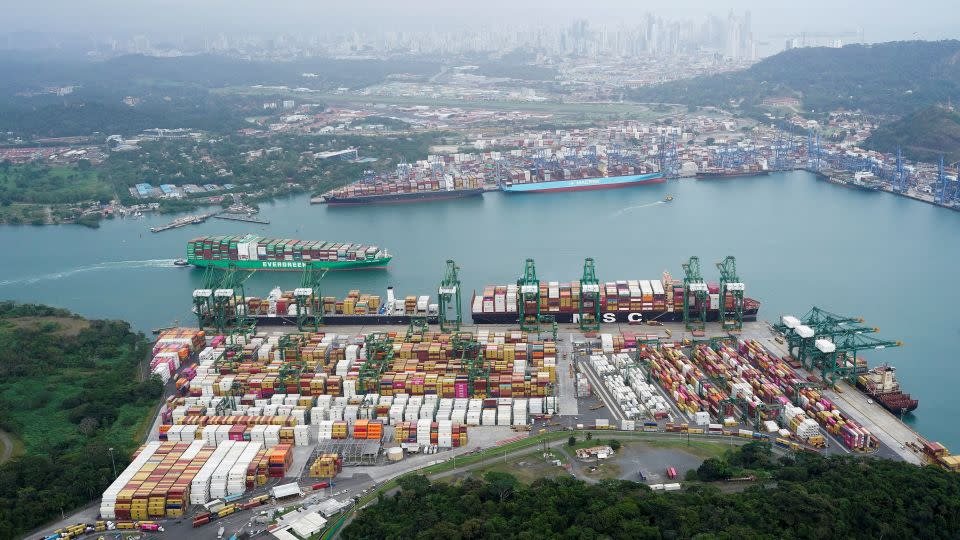
However, concerns over Chinese influence were amplified when two of the canal’s major ports were previously majority-owned by Hong Kong-based conglomerate CK Hutchison Holdings.
In a move that may have eased Trump’s concerns, CK Hutchison recently sold most of its global port operations, spanning 23 countries, to a US-led consortium, headed by BlackRock, for $22.8 billion. However, the sale sparked outrage in China.
The pro-Beijing Hong Kong newspaper, Ta Kung Pao, labeled the deal a “betrayal” of the Chinese people and accused CK Hutchison of “spineless groveling” to Western interests. The article was later shared on the official websites of China’s representative offices in Hong Kong and Macau, signaling Beijing’s approval of the criticism.
While the Pentagon explores its options, the situation remains tense. Panama’s government is determined to protect its sovereignty, while the US seeks to secure its strategic interests in the face of growing Chinese influence in the region.
