

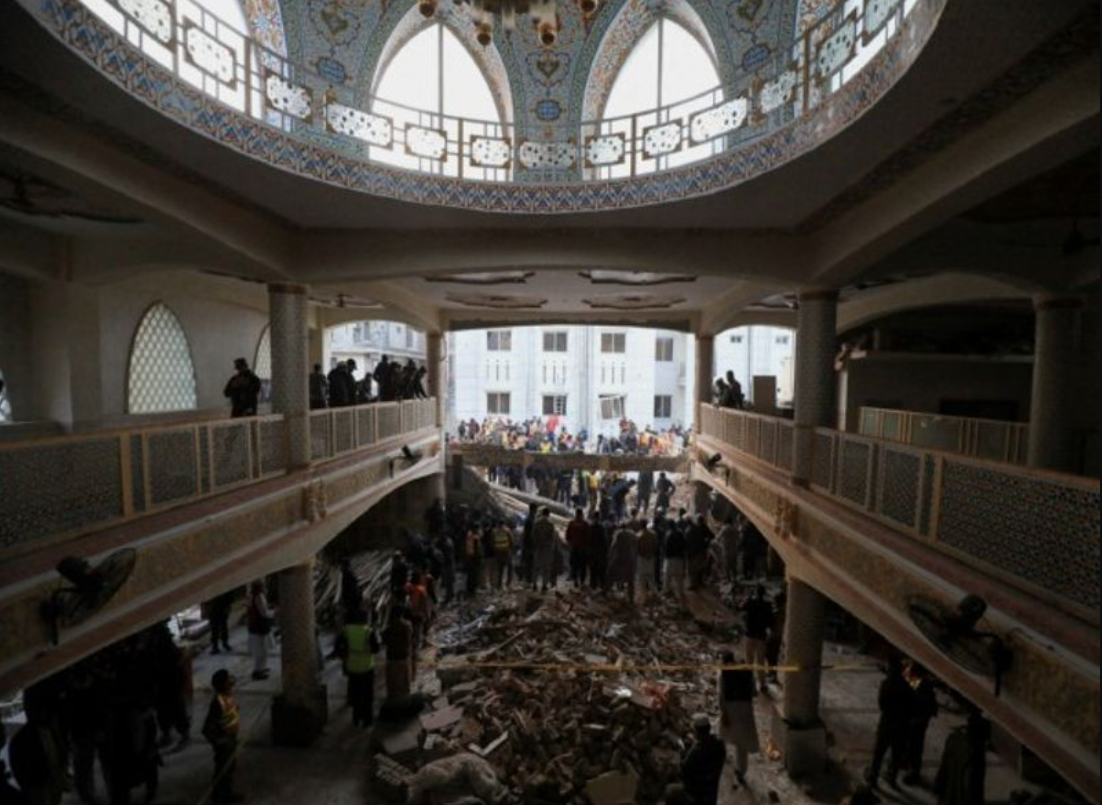

An improvised explosive device (IED) detonated inside a mosque in Khyber Pakhtunkhwa’s South Waziristan during Friday prayers, injuring Jamiat Ulema-e-Islam (JUI) district chief Abdullah Nadeem and three others, according to police.
The explosion occurred at 1:45 pm at Maulana Abdul Aziz Mosque on Azam Warsak Bypass Road, with the device planted in the mosque’s pulpit, officials said.
“Abdullah Nadeem sustained serious injuries in the blast, while three other JUI members—Rehmanullah, Mullah Noor, and Shah Behran—received minor wounds,” a police statement confirmed.
All the injured were promptly transported to the District Headquarters Hospital for medical treatment. Authorities have launched an investigation and are gathering evidence from the site.
Mosques, particularly during Friday congregational prayers, have been targeted in similar attacks in Khyber Pakhtunkhwa in the past.
A district police spokesperson stated that no group has claimed responsibility for the bombing yet. He further revealed that Abdullah Nadeem had been receiving death threats for some time and was previously attacked about seven to eight months ago.
Recent months have witnessed several attacks on religious sites. Last month, a suicide bombing at the Darul Uloom Haqqania seminary in Nowshera resulted in six fatalities, including JUI-S leader Maulana Hamidul Haq Haqqani, and injured 15 others.
Similarly, on January 30, 2023, a devastating blast struck a mosque in Peshawar’s Police Lines area, killing at least 59 people and injuring 157. The attack, which took place in a high-security zone, caused significant structural damage, including the collapse of an inner roof.
In 2022, another powerful suicide bombing hit Jamia Masjid Koocha Risaldar in Peshawar’s old city. The attacker fatally shot a police officer at the entrance before detonating explosives inside the packed prayer hall.
