

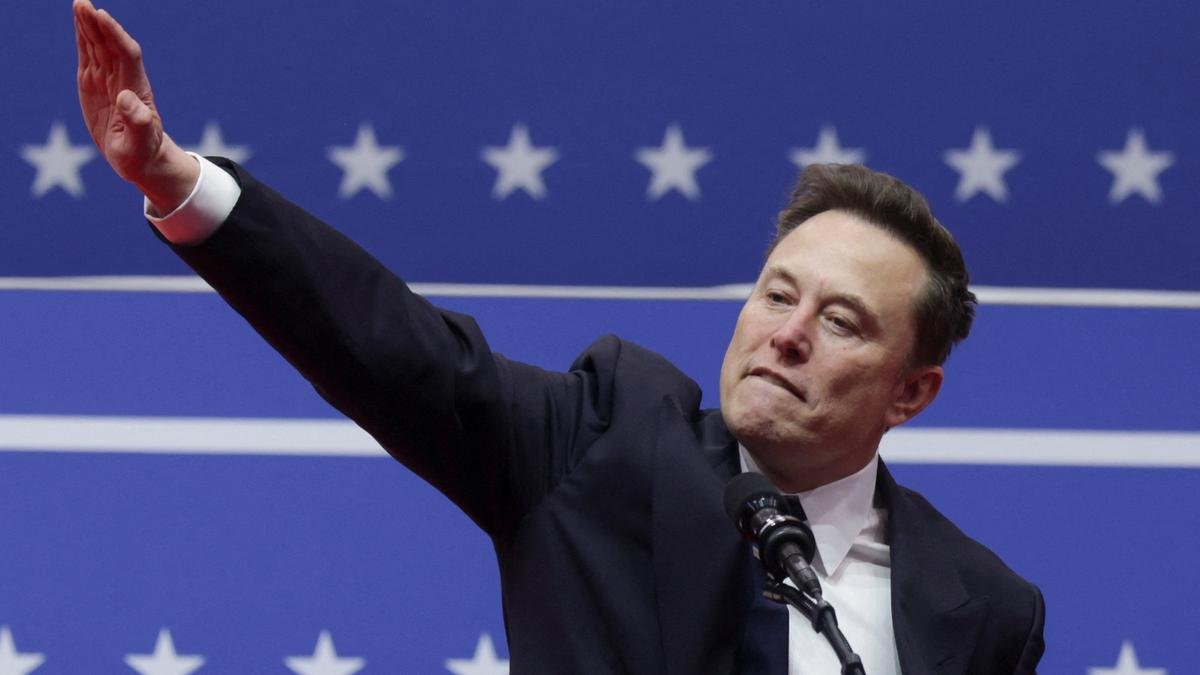

A federal judge blocked billionaire Elon Musk and the Department of Government Efficiency (DOGE) from attempting to shut down the U.S. Agency for International Development (USAID), ruling that their actions likely violated the U.S. Constitution.
In a preliminary decision, U.S. District Judge Theodore Chuang of Maryland ordered Musk—who serves as a key adviser to President Donald Trump—and DOGE to restore USAID employees’ access to the agency’s computer systems. This includes both direct staff and contractors, thousands of whom had been placed on leave.
The ruling stems from a lawsuit filed by current and former USAID employees—one of several pending cases challenging the rapid dismantling of the agency, which plays a central role in Washington’s humanitarian aid efforts.
“Today’s ruling is a crucial victory against Elon Musk and his unconstitutional attack on USAID, the U.S. government, and the rule of law,” said Norm Eisen, executive chair of the State Democracy Defenders Fund, who represents 26 anonymous plaintiffs in the case.
Trump, speaking to Fox News, vowed to appeal the decision.
“I guarantee you we will appeal. These rogue judges are destroying our country,” he said on The Ingraham Angle.
Upon returning to the White House, Trump had issued a 90-day freeze on all U.S. foreign aid and ordered a review to determine whether such programs aligned with his administration’s policies. Shortly after, Musk and DOGE took control of USAID’s payment and email systems, suspended many of its financial transactions, and placed large portions of its staff on leave.
On February 3, Musk posted on X that he had “spent the weekend feeding USAID into the wood chipper.”
The plaintiffs, in their lawsuit filed on February 13, argued that Musk had unlawfully taken control of USAID and was effectively acting as a government official without the required nomination by the president or confirmation by the Senate—an alleged violation of the Constitution. They further claimed that Musk and DOGE had exceeded the executive branch’s authority by dismantling an agency created by Congress.
Judge Chuang, an appointee of former President Barack Obama, agreed that Musk and DOGE “likely violated the United States Constitution in multiple ways” and that their actions had harmed not only the plaintiffs but also the public interest.
Musk and DOGE, in their court filings, contended that Musk’s role was merely advisory and that agency officials, not DOGE, were responsible for the contested actions. However, Chuang determined that Musk and DOGE had, in practice, exercised direct control over USAID.
