

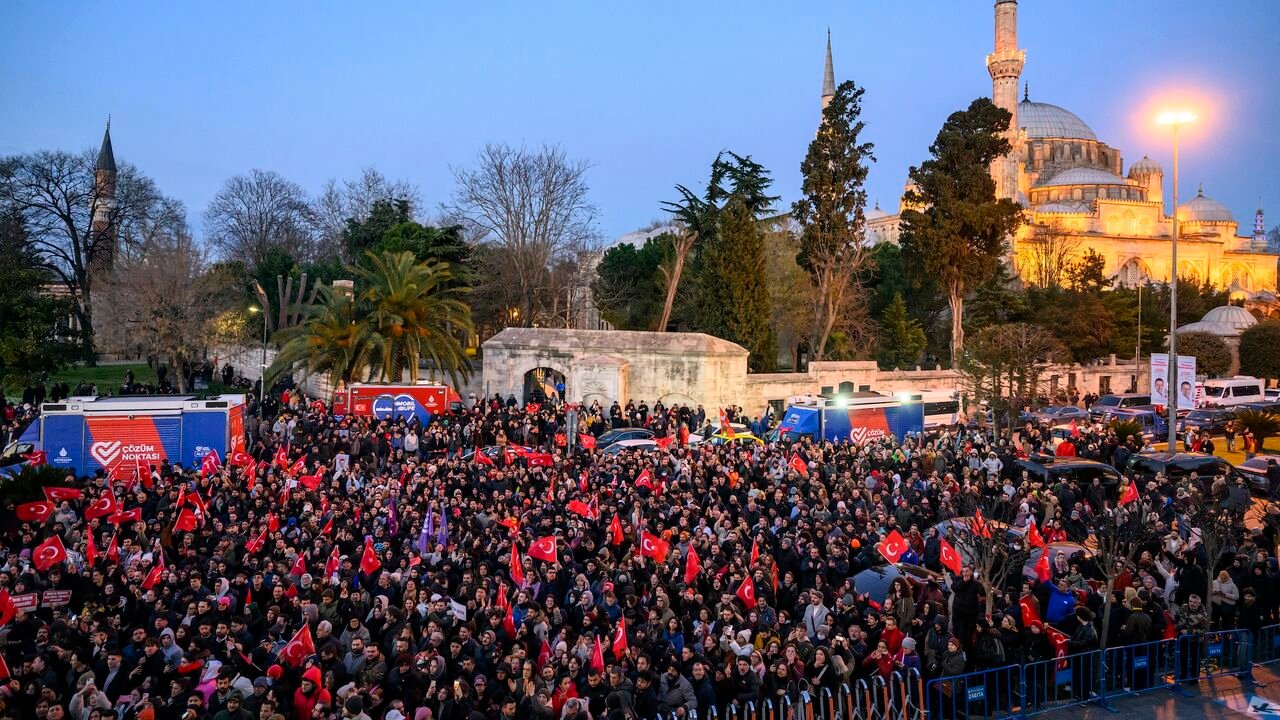

Türkiye is experiencing a second consecutive night of protests following the arrest of Istanbul Mayor Ekrem Imamoglu in a pre-dawn raid on Wednesday. His detention, part of a wider corruption and terrorism investigation, has ignited widespread unrest. This development comes just days before Imamoglu was expected to announce his candidacy for the 2028 presidential election, further intensifying the public’s reaction.
Protests erupted outside Istanbul’s City Hall on Thursday, where demonstrators clashed with police as they tried to march toward Taksim Square, a site historically significant for political rallies. Similar scenes unfolded in Ankara, where security forces used water cannons to disperse students at the Middle East Technical University. Smaller protests were also reported in cities like Izmir, Adana, and others, as public anger over Imamoglu’s arrest continues to grow.
Who is Ekrem Imamoglu?
Ekrem Imamoglu, 53, is a leading figure in Türkiye’s opposition politics. A member of the secular Republican People’s Party (CHP), Imamoglu rose to prominence after securing a historic victory in Istanbul’s mayoral race in 2019, where he defeated the ruling Justice and Development Party (AKP) candidate twice after an initial result was annulled.
His victory was seen as a significant blow to President Recep Tayyip Erdogan, who had long regarded Istanbul as a key political stronghold. Imamoglu has since positioned himself as a vocal critic of Erdogan’s government, advocating for democratic reforms, transparency, and stronger local governance. His rising popularity, especially among young and urban voters, makes him a strong potential challenger to the AKP in future elections.
Imamoglu’s detention is linked to a broader investigation involving corruption, bribery, extortion, and allegations of ties to the outlawed Kurdistan Workers’ Party (PKK). The PKK, a militant group engaged in an armed insurgency since the 1980s, is classified as a terrorist organization by Türkiye, the United States, and the European Union. Such allegations against opposition figures have often been used as a tool to weaken critics of Erdogan’s government.
Why Are Protests Erupting?
Imamoglu’s arrest has sparked widespread belief that the move is politically motivated, aimed at undermining the opposition ahead of upcoming elections. His supporters argue that the charges reflect a broader crackdown on political dissent, a sentiment echoed in the cases of other opposition figures, journalists, and activists.
Despite the government-imposed four-day ban on demonstrations, protests have continued to grow. CHP leader Ozgur Ozel addressed a rally outside Istanbul’s City Hall, urging the public to defy the restrictions peacefully and demand justice. Social media has played a crucial role in mobilizing opposition, with over 18.6 million posts related to Imamoglu’s detention shared within 24 hours. Authorities have detained 37 individuals for allegedly inciting unrest online.
Economic and Political Implications
Imamoglu’s arrest has had significant economic consequences. The Turkish stock market was briefly halted on Wednesday to prevent panic selling, and the Turkish lira hit a record low. Investors are concerned that political instability could worsen an economy already burdened by high inflation and a depreciating currency.
International observers have expressed growing concerns over Türkiye’s political environment. The European Union and human rights organizations have previously criticized the country’s judiciary for its lack of independence, with concerns that legal cases are increasingly being used to target opposition politicians.
What’s Next?
The protests show no signs of subsiding, leaving Türkiye’s political landscape tense and uncertain. Imamoglu’s legal troubles add to a growing list of opposition leaders facing prosecution, fueling fears about the erosion of democratic freedoms in the country. The coming weeks will be crucial in determining whether the government will escalate its crackdown or seek to ease tensions ahead of future elections.
