

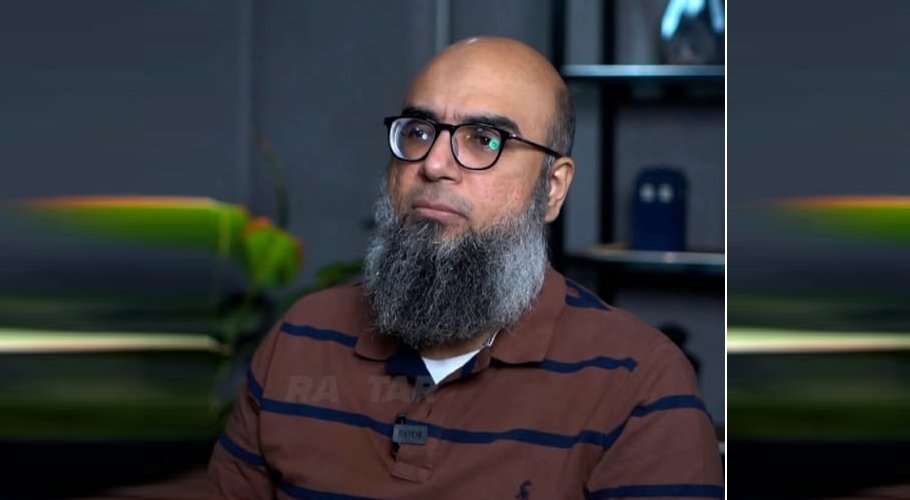

Journalist Farhan Mallick
A court in Karachi has remanded journalist Farhan Mallick into the custody of the Federal Investigation Agency (FIA) for four days over allegations of airing “anti-state” content on his YouTube channel.
Mallick, the founder of media agency Raftar and former news director of Samaa TV, was taken into custody following claims that his platform was involved in disseminating content deemed against state institutions.
Raftar describes itself as a “dynamic platform dedicated to driving social change through the power of storytelling.” However, its recent coverage led to an investigation by the FIA, which accused the agency’s YouTube channel of running a campaign featuring allegedly anti-state content.
Mallick was arrested in Karachi a day before his court appearance. His media agency claimed that FIA officials had visited their office without prior notice, where they allegedly harassed staff members before summoning Mallick.
The journalist was then presented before Judicial Magistrate-I (East) Yusra Ashfaq, where the FIA requested 14 days of physical custody. However, the court approved a four-day remand, which will last until March 25.
According to official documents, Mallick has been booked under multiple provisions of the Prevention of Electronic Crimes Act (PECA) 2016, including Section 16 (unauthorized use of identity information) and Section 20 (offences against the dignity of a natural person).
Additionally, he faces charges under Section 26A, a recently introduced amendment that criminalizes fake news likely to cause public panic or unrest. If convicted, he could face up to three years in prison or a fine of Rs2 million, or both.
The FIA’s first information report (FIR), dated March 20, states that Raftar TV’s YouTube channel was allegedly involved in posting videos aimed at defaming state institutions.
A technical analysis of the channel reportedly found that Mallick was engaged in generating and spreading fake news with the intention of inciting public disorder. The FIA further claimed that his content had caused harm to the reputation of public institutions on an international level.
As part of its investigation, the FIA sought Mallick’s physical remand to interrogate him regarding his alleged accomplices and to recover any digital equipment containing incriminating material. The agency also stated that efforts were needed to determine the “modus operandi” of his activities.
However, critics argue that the case against Mallick lacks transparency. Prominent lawyer Muhammad Jibran Nasir pointed out that neither the FIR nor the remand report specifies any particular piece of content that warranted legal action. “No URLs, no links, no specific date of the alleged offence—this case is extremely vague,” Nasir told. He further highlighted that Section 26A, which Mallick has been charged under, was not in effect at the time the initial FIA inquiry was launched in November 2024.
Since the PECA amendment was only introduced in January 2025, Nasir argued that the law was being applied retroactively, a move that should have been questioned by the magistrate.
Raftar, in a statement posted on X, also criticized the lack of evidence supporting the charges against Mallick. “At this stage, no concrete evidence has been presented to substantiate the ‘anti-state’ allegations against Mr. Mallick or Raftar,” the statement read. The media agency reaffirmed its commitment to press freedom and vowed to explore all legal avenues to challenge the accusations.
Mallick’s arrest has sparked condemnation from media organizations and human rights groups. The Human Rights Commission of Pakistan (HRCP) called on authorities to curb the overreach of law enforcement agencies and uphold the right to freedom of expression. The journalist community has also expressed concerns over increasing restrictions on press freedom in Pakistan.
Pakistan ranks 152 out of 180 countries in the World Press Freedom Index, compiled by Reporters Without Borders. Watchdogs have long criticized the government for imposing internet restrictions, including temporary bans on social media platforms like YouTube and TikTok. The social media platform X remains officially blocked in the country.
As Mallick remains in FIA custody, his case raises serious questions about the growing crackdown on digital journalism and the use of vague legal provisions to silence dissent.
