

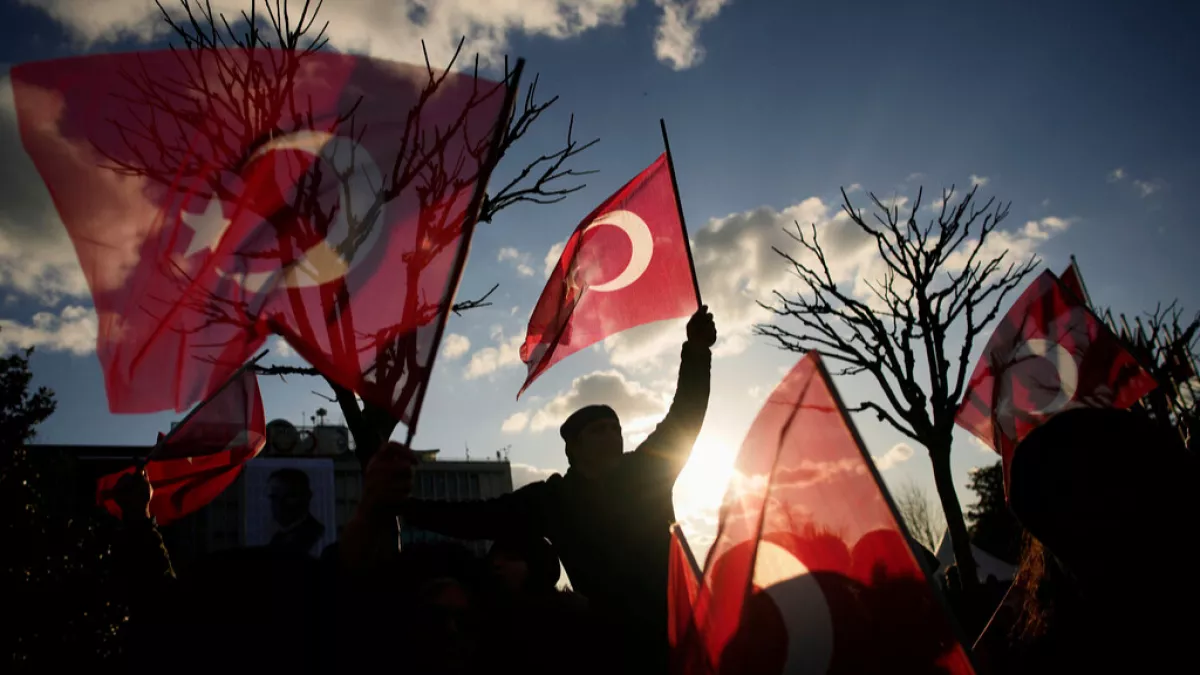

Mayor’s Detention Protests
ISTANBUL: Turkish President Recep Tayyip Erdogan issued a strong warning on Friday, stating that Türkiye would not tolerate any street violence or public disorder following the detention of Istanbul Mayor Ekrem Imamoglu. The arrest has sparked some of the largest civil protests in over a decade, with thousands of demonstrators taking to the streets across the country.
“We will not accept the disruption of public order. Just as we have never yielded to street terrorism, we will not surrender to vandalism,” Erdogan, 71, said while addressing an audience in Ankara. His remarks came amid growing unrest in Istanbul, Ankara, and several other cities, where protestors have been rallying against Imamoglu’s detention.
Demonstrations erupted on Wednesday following the mayor’s arrest, with university students and opposition supporters among the protestors. The unrest led to clashes between demonstrators and security forces, with police deploying water cannons to disperse the crowds and closing down several streets.
Authorities also imposed a four-day ban on protests, warning of strict action against those participating in demonstrations. Despite this, more protests are expected over the weekend, coinciding with an upcoming court ruling that could formally arrest Imamoglu.
Imamoglu, 54, who is regarded as Erdogan’s strongest political rival, faces charges including graft and aiding a terrorist group. His party, the main opposition Republican People’s Party (CHP), has denounced the charges as politically motivated, urging its supporters to continue peaceful demonstrations in defense of democracy and voting rights. European leaders have also criticized Imamoglu’s detention, calling it a sign of democratic decline in Türkiye.
Erdogan, however, dismissed the criticism and warned against further protests, calling them a “dead end” approach. “Pointing to the streets instead of the courts to defend theft, looting, illegality, and fraud is gravely irresponsible,” he said. Turkish authorities reported that 53 individuals were detained during Thursday’s protests.
The current wave of protests is the most significant display of civil disobedience in Türkiye since the 2013 Gezi Park demonstrations, which were met with a harsh crackdown.
Critics argue that Erdogan’s 22-year rule has increasingly moved toward autocracy, with the latest legal actions against opposition figures seen as an attempt to weaken their chances in future elections. The government, however, denies any political interference, insisting that the judiciary operates independently.
CHP leader Özgür Özel has accused Erdogan of fearing mass protests, labeling the government’s ban on demonstrations as illegal. He encouraged citizens to peacefully take to the streets in support of their electoral rights. “Break down those barricades without harming the police, take to the streets and squares,” Özel urged.
In a significant political move, the CHP is set to officially declare Imamoglu as its presidential candidate for the next elections on Sunday. The party has invited non-members to participate in the vote to strengthen public resistance against Erdogan’s government.
Although Türkiye’s next election is scheduled for 2028, opposition leaders fear that Erdogan may attempt to call an earlier vote to maintain his grip on power. If Erdogan seeks to run again, parliament would need to schedule an early election to allow his candidacy.
The crisis surrounding Imamoglu’s detention deepened after authorities annulled his university degree, a decision that could prevent him from running for president. Under Türkiye’s constitution, presidential candidates must hold a four-year degree.
Meanwhile, an Ankara prosecutor has also launched an investigation into alleged irregularities in the CHP’s previous congress, leading the party to schedule an extraordinary congress on April 6 to prevent the government from appointing an external trustee to lead the party.
As tensions continue to escalate, Imamoglu’s fate remains uncertain. His detention and the government’s crackdown on protests are fueling concerns over Türkiye’s democratic future, with the opposition vowing to resist any attempts to undermine their electoral prospects.
