

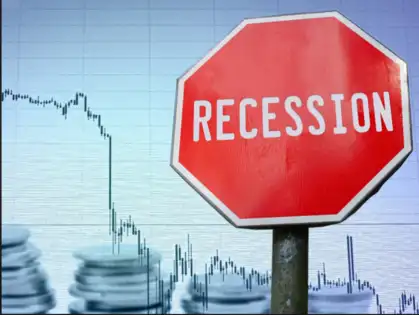

Global Recession Risk
JP Morgan has significantly raised its forecast for the likelihood of a global recession, citing growing concerns over the escalating trade tensions between the United States and China. In its latest report, the investment banking giant now places the global recession risk at 60%, up sharply from its previous estimate of 40%.
The revision follows a recent wave of tariff increases implemented by the Trump administration targeting multiple countries, with China responding swiftly with retaliatory duties on US imports. This ongoing trade confrontation, analysts warn, is increasingly weighing on business confidence and casting a long shadow over the global economic outlook.
JP Morgan emphasized that these trade policies—marked by unpredictability and protectionism—are now among the most disruptive forces threatening the global economy. “Disruptive US policies have been recognised as the biggest risk to the global outlook all year,” the report stated. “The effect is likely to be magnified through tariff retaliation, a slide in US business sentiment, and widespread supply-chain disruptions.”
Echoing these concerns, S&P Global has also revised its recession forecast for the US economy, now estimating a 30–35% probability—up from 25% in March. Goldman Sachs similarly raised its own projection to 35%, warning that underlying economic fundamentals in the US are weakening compared to previous years.
Other financial institutions, including HSBC, Barclays, and Deutsche Bank, have issued parallel warnings. HSBC noted that the recession narrative is gaining traction in markets, citing their equity market-implied indicator which suggests that stocks are already pricing in a 40% chance of recession by year-end.
The impact of these grim forecasts is already evident in equity markets. Since the beginning of the year, the S&P 500 index has plunged more than 8%, largely in response to the tariff announcements made earlier in January.
While there was a brief rally in November—fueled by optimism surrounding Trump’s re-election and potential pro-business policies—these hopes have been overshadowed by the renewed tariff escalations.
Barclays and UBS have both warned that continued trade frictions could tip the US economy into contraction. Analysts at Capital Economics and RBC Capital Markets have cut their GDP growth forecasts for the year to between 0.1% and 1%.
Capital Economics has set the most bearish year-end target for the S&P 500 at 5,500, closely followed by RBC’s projection of 5,550.
As global markets respond to growing uncertainty, experts caution that unless trade relations improve, the world economy could be headed for a pronounced and prolonged slowdown.
