

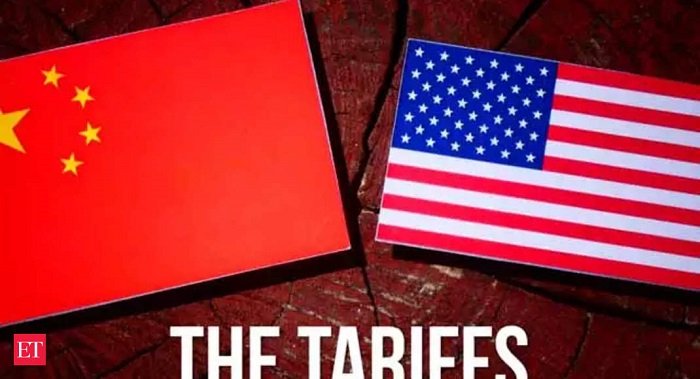

China has announced it will impose tariffs of 84% on US goods starting Thursday, a significant increase from the previously planned 34%. The decision was confirmed by China’s finance ministry on Wednesday, marking the latest escalation in the ongoing global trade war, which was sparked by US President Donald Trump’s aggressive tariff policies.
Trump’s own tariffs, which came into effect earlier that day, include a hefty 104% duty on Chinese goods. The European Union is also preparing retaliatory measures, which are expected to be announced soon.
These tariffs, which Trump claims are intended to address the US trade deficit with multiple countries, have disrupted decades-old global trade practices. They have raised concerns about a potential global recession and caused trillions of dollars in market losses for major corporations.
Global financial markets were hit hard on Wednesday as Trump’s steep 104% tariffs on Chinese goods took effect, while a sharp sell-off in US bonds fueled fears that foreign investment was fleeing US assets. US Treasury Secretary Scott Bessent criticized China’s new tariffs, calling them detrimental.
“They have the most imbalanced economy in the history of the modern world, and I can tell you that this escalation is a loser for them,” Bessent said during an interview with Fox Business Network.
The week has already brought significant volatility to the markets, wiping out trillions of dollars in stock value, and negatively impacting commodities and emerging markets. Major US banks saw their shares drop in pre-market trading, as China’s announcement of an 84% tariff on US goods sent shockwaves through the market. Oil prices, already at four-year lows, continued their downward spiral.
“The US and China are stuck in an unprecedented, and expensive, game of chicken, and it seems that both sides are unwilling to back down,” said Ting Lu, Chief China Economist at Nomura.
In retaliation to previous counter-tariffs from Beijing, Trump had nearly doubled duties on Chinese imports, which were initially set at 54% just last week.
The White House did not immediately comment on China’s latest retaliatory move.
Earlier on Wednesday, China defended its trade surplus with the United States, labeling it as an inevitable result of global market dynamics. Beijing warned that it had both the determination and resources to continue this trade conflict if Trump persisted with tariffs on Chinese goods.
Amid this trade turmoil, China’s currency has faced significant downward pressure, with the offshore yuan hitting record lows due to the tariffs. However, sources informed Reuters that China’s central bank had instructed major state-owned banks to curb US dollar purchases and prevent any sharp declines in the yuan’s value.
China also raised concerns about the US tariffs at the World Trade Organization (WTO), arguing that they could further destabilize global trade. “The situation has dangerously escalated. As one of the affected members, China expressed grave concern and firm opposition to this reckless move,” a statement from China’s mission to the WTO.
