


Nuclear Program
WASHINGTON: President Donald Trump stated on Wednesday that Israel would lead a potential military strike against Iran if Tehran refuses to abandon its nuclear weapons program.
These remarks were made ahead of planned talks between U.S. and Iranian officials in Oman later this week. While the U.S. government has described the talks as “direct,” Iran has labeled them as “indirect,” indicating the differing perspectives between the two nations.
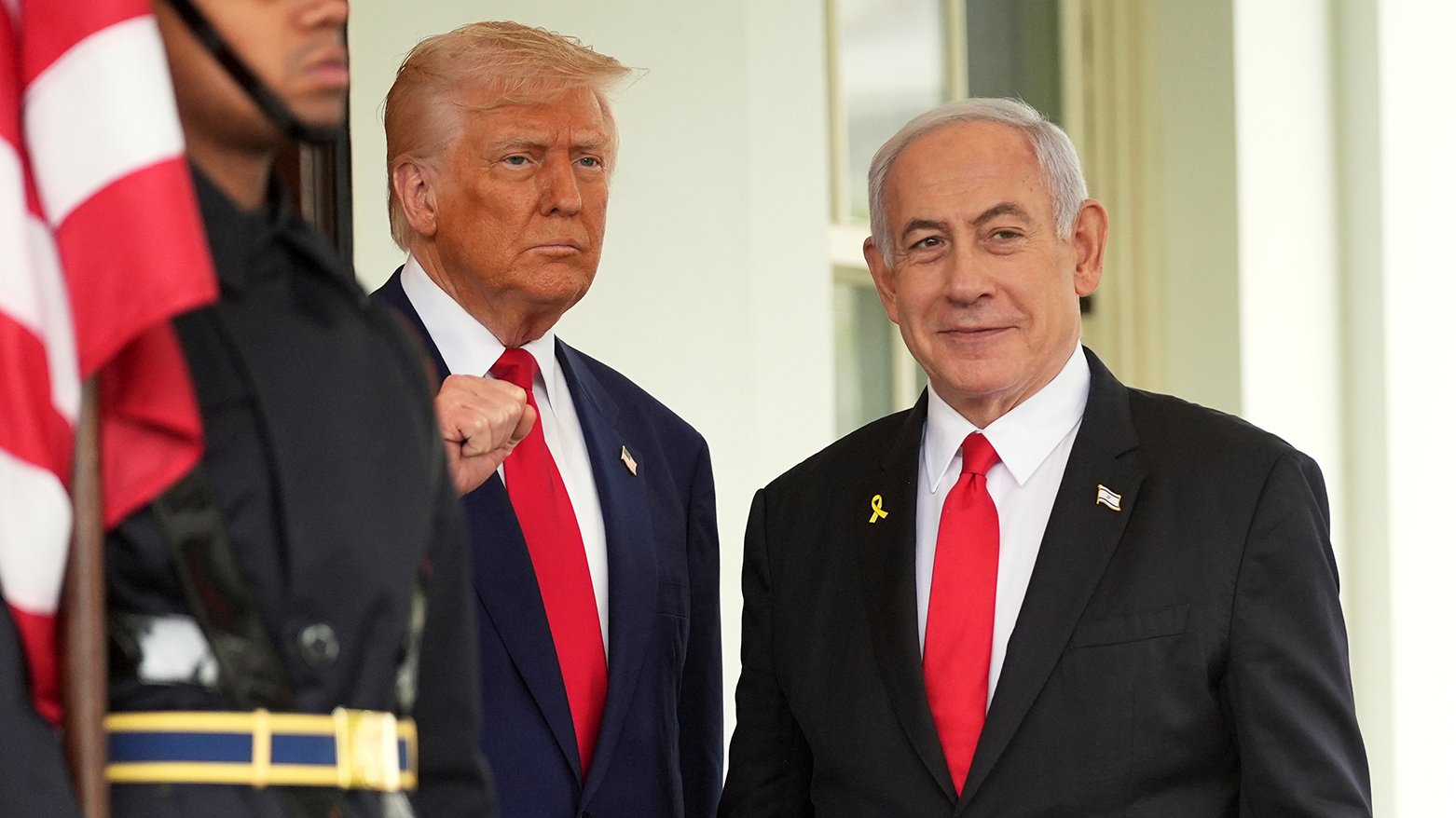
Trump made it clear that if military action becomes necessary to prevent Iran from obtaining nuclear weapons, the U.S. would take appropriate steps, with Israel taking a leadership role in any military response. “If it requires military action, we’re going to have military,” Trump said. “Israel will obviously be very much involved in that. They’ll be the leader of that. But nobody leads us, but we do what we want to do.” These comments underline the close military cooperation between the U.S. and Israel, especially on issues concerning Iran’s nuclear ambitions.
Israeli Prime Minister Benjamin Netanyahu, who has long advocated for a hardline stance on Iran, expressed support for Trump’s diplomatic efforts to resolve the issue. Netanyahu reiterated that both Israel and the U.S. share the same goal: preventing Iran from acquiring nuclear weapons.
In 2018, Netanyahu was instrumental in persuading Trump to withdraw from the Joint Comprehensive Plan of Action (JCPOA), also known as the Iran nuclear deal, a decision that led to heightened tensions between the U.S. and Iran.
Netanyahu has also expressed his preference for a deal similar to the one made with Libya in 2003, where Moammar Gadhafi abandoned his nuclear program. Iran, however, has insisted that its nuclear program is peaceful and should continue under the oversight of the International Atomic Energy Agency (IAEA).
The U.S. is increasingly alarmed by Iran’s progress toward developing nuclear weapons, though Trump emphasized that he does not have a set timeline for when negotiations should conclude. “When you start talks, you know, if they’re going along well or not,” Trump said, adding that he has a “feeling” the talks may not progress well.
In 2015, the U.S. and world powers reached a nuclear deal with Iran that limited Tehran’s uranium enrichment in exchange for the lifting of sanctions. Trump unilaterally pulled out of the deal in 2018, calling it the “worst deal ever.”
Since then, the U.S. and Iran have made limited progress in negotiations. Indirect talks in Vienna in 2021 aimed at restoring the original agreement ended without a resolution.
Meanwhile, on Wednesday, the U.S. Treasury Department announced new sanctions against Iran’s nuclear program, targeting several entities, including the Atomic Energy Organization of Iran and its subsidiaries. These sanctions were aimed at limiting Iran’s nuclear capabilities.
Iran’s President, Masoud Pezeshkian, reiterated that Iran has no interest in acquiring nuclear weapons, stressing that the country would be open to U.S. investment if an agreement can be reached.
This marks a shift in Iran’s rhetoric, as it previously had refused to engage with American businesses, particularly after the 2015 deal. Pezeshkian’s comments could signal a willingness for further diplomatic engagement, although the broader issue of Iran’s nuclear ambitions remains unresolved.
The U.S. and Israel’s joint stance on Iran’s nuclear program has significant implications for the region, and the upcoming talks could be pivotal in determining whether diplomatic efforts can prevent further escalation.
