

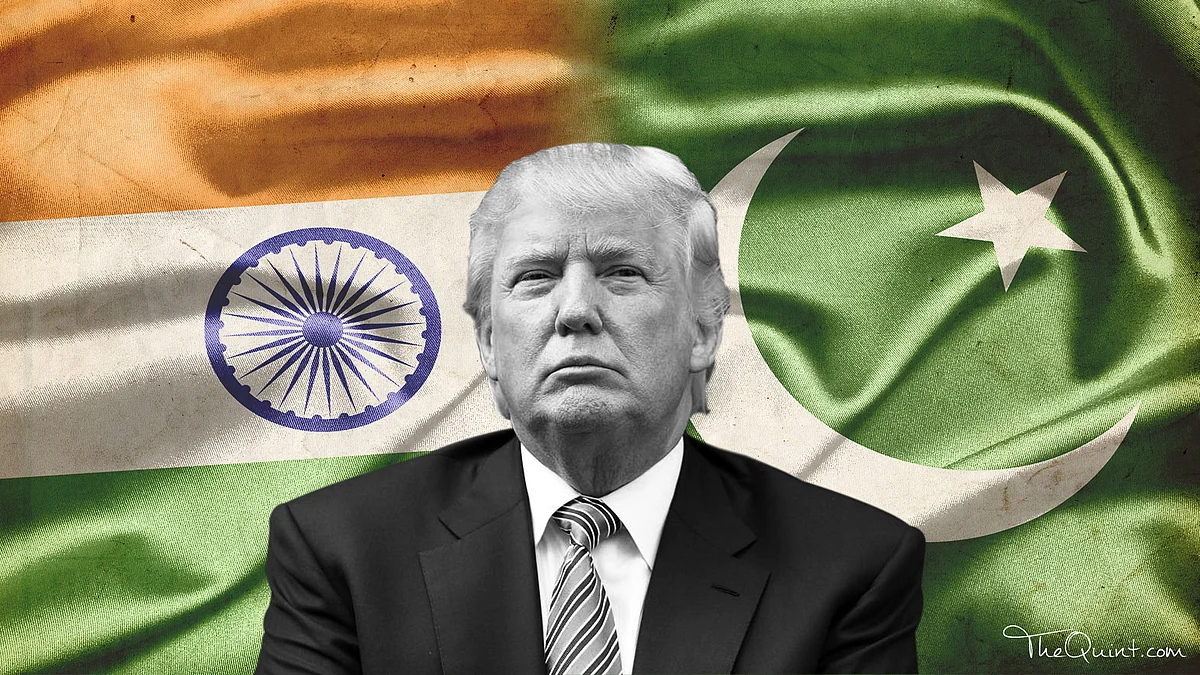

Border Issues
US President Donald Trump expressed hope on Friday that Pakistan and India would be able to resolve the rising tensions between them following a deadly attack in the Indian-occupied Kashmir region.
The attack, which occurred in Pahalgam, claimed the lives of at least 26 people, mostly Indian nationals, and injured 17 others. In a statement made on Air Force One, Trump referred to the long-standing tensions between the two nuclear-armed nations, stating that these issues had been present for “1,500 years.”
Despite the historical conflicts, he expressed confidence that both countries would eventually “figure it out” and find a solution to their differences.
Trump’s comments came amidst escalating diplomatic measures between Pakistan and India. India has accused Pakistan of being involved in the Pahalgam attack, an allegation Pakistan has firmly denied, calling it a “false flag operation” orchestrated by India.
In response to the attack, both countries have taken retaliatory measures, with India suspending the 1960 Indus Waters Treaty, which governs water distribution between the two nations. Pakistan, in turn, has suspended trade with India, closed airspace, and announced the suspension of several bilateral agreements, including the Simla Agreement.
Trump, who said he has strong relations with both India and Pakistan, was asked whether he would engage with Indian Prime Minister Narendra Modi or Pakistani Prime Minister Shehbaz Sharif. He confirmed that he remains in close contact with both countries but did not specify any immediate plans for direct intervention.
Meanwhile, the United Nations has urged both countries to exercise maximum restraint. UN Secretary General Antonio Guterres has expressed deep concern over the situation, calling for peaceful resolution through mutual engagement.
Despite the international appeals for restraint, there were reports of continued military exchanges along the Line of Control (LoC), further raising tensions between the two countries.
Pakistan’s National Security Committee (NSC) convened a high-level meeting to address India’s provocative actions. The committee, which includes top government and military officials, decided to suspend key bilateral agreements with India and closed the Wagah Border, a significant crossing point between the two nations.
Pakistani authorities also emphasized that any actions by India that provoke further aggression would be met with a firm and immediate response.
In a related development, the Foreign Office spokesperson reiterated Pakistan’s stance, rejecting India’s accusations and emphasizing that Pakistan would not tolerate any actions that undermine its sovereignty.
Pakistan’s interior minister also assured that the country is ready to defend itself against any aggression, asserting that Pakistan’s defense capabilities are impregnable. The situation remains tense as both countries continue to navigate the volatile diplomatic landscape.
