

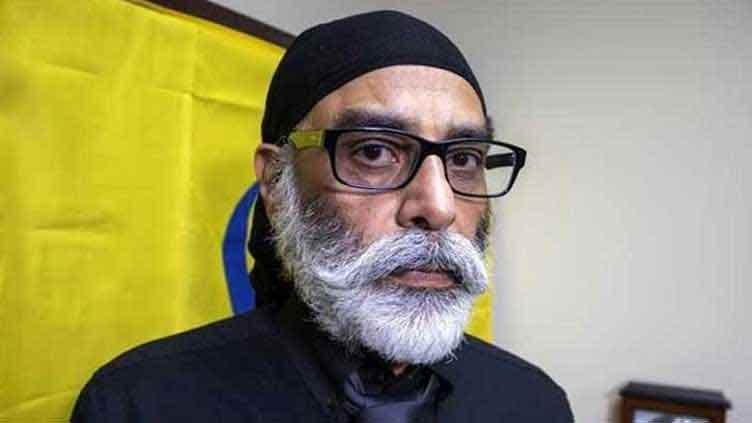

Gurpatwant Singh Pannun, leader of the Khalistan Movement and a prominent Sikh separatist based in the United States, has issued a strong statement warning India against any military aggression towards Pakistan, asserting that the Sikh community stands firmly with Pakistan in the face of rising tensions.
In a video message released this week, Pannun stated, “We will not allow the Indian Army to pass through Punjab to attack Pakistan,” vowing that Sikhs would block any such military movement.
Reaffirming what he called a historic bond between Sikhs and Pakistan, Pannun claimed, “We, twenty million Sikhs, stand with Pakistan like a brick wall.” He went on to criticize India’s treatment of minorities, particularly Sikhs, calling out what he described as “systematic oppression.”
“This is not 1965 or 1971—this is 2025,” Pannun declared, in reference to past India-Pakistan conflicts, adding that the current geopolitical reality no longer favors Indian military adventurism.
Pannun also praised the symbolic meaning of Pakistan’s name, saying, “’Pakistan’ stands for purity. We are a people who have never initiated aggression, and we never will.”
He issued a pointed warning to Indian leadership, stating, “Those who initiate attacks don’t survive—whether it was Indira Gandhi or today’s leaders like Narendra Modi and Amit Shah.” He added that leaders such as Modi, Ajit Doval, Amit Shah, and External Affairs Minister S. Jaishankar would eventually be held accountable under international law.
Pannun further accused the Indian government of staging a false-flag operation in Pahalgam to manipulate public sentiment and secure political gains. “India killed its own Hindus in Pahalgam for electoral advantage,” he alleged, without providing evidence.
His comments come amid escalating regional tensions and growing criticism from international human rights groups over the treatment of minorities in India, particularly in Punjab and Kashmir.
Pannun, who is considered a fugitive by Indian authorities and has been designated a terrorist under India’s anti-terror laws, remains a highly polarizing figure. His remarks have intensified the already strained relations between New Delhi and Sikh separatist groups abroad.
