


On Monday, China called on India and Pakistan to exercise restraint after reports of ongoing exchanges of fire at the Line of Control (LoC) following a deadly assault in Pahalgam, located in occupied Kashmir.
The April 22 incident claimed the lives of 26 people, most of them tourists, marking one of the deadliest attacks in the disputed Himalayan region since 2000. A group known as Kashmir Resistance, also referred to as The Resistance Front, denied any involvement after an initial statement suggested otherwise.
While India has hinted at cross-border involvement without presenting evidence, Pakistan firmly rejected the accusations. Prime Minister Shehbaz Sharif has advocated for an impartial investigation into the incident.
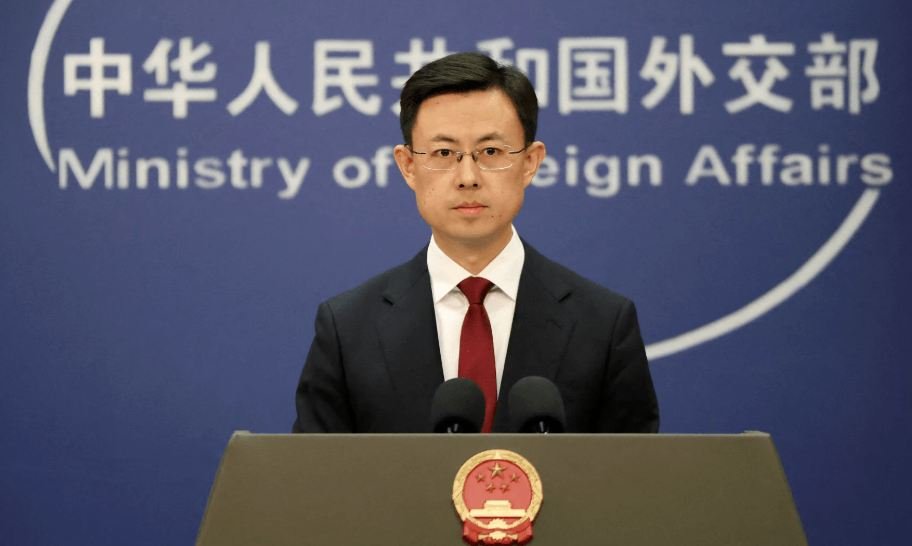
Chinese Foreign Ministry spokesperson Guo Jiakun emphasized during a briefing that both countries should “exercise restraint, meet each other halfway, resolve differences through dialogue, and work together to maintain regional peace and stability.” Jiakun welcomed any steps aimed at easing tensions.
Reports indicated that the LoC witnessed gunfire for a fourth consecutive night after a relatively calm period of four years. India claimed that Pakistan Army posts initiated “unprovoked” firing between April 27 and 28, though no casualties were reported. Pakistan did not immediately confirm the incident.
Following the Pahalgam attack, India conducted several military drills across the country, some described as routine preparedness exercises by Indian officials. Diplomatic tensions also escalated, with India suspending the critical Indus Waters Treaty (IWT) on April 23 — a water-sharing agreement historically resilient through wars. In response, Pakistan threatened to suspend the Simla Agreement and close its airspace to Indian flights.
Pakistan’s National Security Committee urged India to “refrain from blame games and political exploitation” of the tragedy.
Indian Prime Minister Narendra Modi vowed to hunt down the perpetrators “to the ends of the earth,” pledging harsh retribution. Calls for military retaliation against Pakistan have also intensified among Indian political circles.
Meanwhile, Pakistan’s Defence Minister Khawaja Asif reiterated Islamabad’s willingness to cooperate in an international investigation, but cautioned that any Indian aggression could lead to “all-out war.”
The United Nations called for maximum restraint from both sides, encouraging peaceful conflict resolution through meaningful engagement.
China’s appeal followed a statement from the United States, which emphasized the need for a “responsible solution.” A U.S. State Department spokesperson confirmed that Washington was closely monitoring the situation and was in communication with both governments. The U.S. reiterated its condemnation of the Pahalgam attack and reaffirmed its support for India, though it refrained from criticizing Pakistan.
While Saudi Arabia and Iran have offered to mediate, former U.S. President Donald Trump expressed confidence that India and Pakistan would resolve the matter independently.
Analysts highlighted Washington’s closer partnership with India in recent years, noting that Pakistan’s strategic importance to the U.S. has diminished since the withdrawal from Afghanistan. Michael Kugelman, a South Asia expert, warned that U.S. support for India could embolden New Delhi, making de-escalation harder.
Former Pakistani ambassador Hussain Haqqani observed that there was little U.S. appetite to intervene diplomatically at this stage, emphasizing that both India and Pakistan historically escalate tensions cyclically.
Ned Price, a former U.S. State Department official, warned that perceived unconditional American backing of India might trigger further escalation between the nuclear-armed neighbors.
Meanwhile, the situation inside occupied Kashmir has worsened. Indian forces, as part of a crackdown after the Pahalgam attack, destroyed nine homes belonging to pro-freedom Kashmiris and detained nearly 2,000 individuals, prompting accusations of collective punishment.
A senior police officer confirmed that residents were being rounded up and questioned as part of the investigation, though authorities insisted these were not formal arrests. Security operations have searched roughly 1,000 houses and surrounding forests.
Local political leaders urged caution, warning that indiscriminate actions could alienate innocent people and fuel further unrest.
Omar Abdullah, the region’s chief minister, urged authorities to target only those responsible while avoiding harm to innocent civilians. Another former chief minister emphasized that alienating the population would play into the hands of militants.
Aga Ruhullah, a federal lawmaker from Kashmir, said the mass detentions amounted to “collective punishment” of Kashmiris.
