


Indian-Sponsored Terrorism
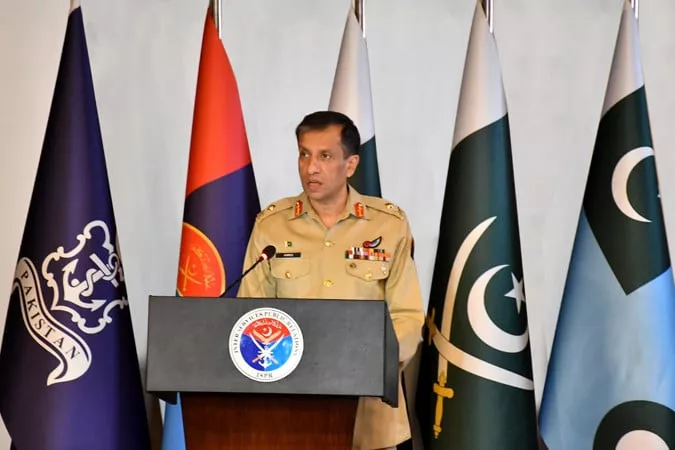
Director-General (DG) Inter-Services Public Relations (ISPR), Lieutenant General Ahmed Sharif Chaudhry, on Tuesday presented what he described as “irrefutable” evidence of Indian-sponsored terrorism inside Pakistan.
His detailed media briefing came in the wake of mounting tensions between Islamabad and New Delhi, following a deadly attack in Pahalgam, located in Indian Illegally Occupied Jammu and Kashmir (IIOJK), for which India has blamed Pakistan without offering any concrete proof.
Opening the press conference, Lt Gen Chaudhry stated unequivocally, “India is involved in state-sponsored cross-border terrorism against Pakistan.” He emphasized that although a week had passed since the Pahalgam incident, no credible evidence had been presented by Indian authorities to justify their accusations.
Lt Gen Chaudhry detailed how Indian intelligence agencies and military personnel have been actively running terror networks within Pakistan, supplying explosive materials, improvised explosive devices (IEDs), and funds to operatives tasked with targeting both civilians and security forces. According to him, this is part of a broader and systematic campaign to destabilize Pakistan and discredit it on the international stage.
One of the most striking revelations was the arrest of a terror suspect, Abdul Majeed, on April 25 near the Jhelum bus terminal. The suspect, trained in India, was found in possession of 2.5 kilograms of explosive material, a drone of Indian origin, and Rs1 million in cash. Forensic analysis of his mobile phone revealed direct communication with Indian handlers, including an Indian Subedar named Sukhwinder.
Other implicated Indian Army personnel include Major Sandeep Verma, Havaldar Amit, and a sepoy, who, according to intercepted communications, instructed Majeed to carry out bombings and civilian attacks in Pakistan.
In one case, Majeed was guided to plant an IED on a military vehicle in Jalalpur Jattan, an attack that martyred four soldiers. For this, he reportedly received Rs656,000. In another instance, schoolchildren discovered a suspicious bag near Kotli, which was later confirmed to be a bomb—evidence that India was planning to frame Pakistan for potential attacks.
Lt Gen Chaudhry also reported that on April 22, Sukhwinder directed another bomb to be planted near Nadalah. The following day, Majeed attempted to execute an attack at a local bus stand.
Amid these developments, the Pakistan Army intercepted and shot down an Indian quadcopter drone near the Line of Control (LoC) in Azad Jammu and Kashmir earlier the same day, underscoring the increasing provocations along the sensitive border region.
India, despite its serious accusations, has not provided any supporting evidence to the international community. Meanwhile, Pakistan continues to deny any involvement in the Pahalgam attack and has offered to cooperate in a transparent investigation. However, tensions remain dangerously high, with Defence Minister Khawaja Asif warning of the risk of “all-out war.”
In response to India’s diplomatic and economic downgrading—including suspending the Indus Waters Treaty and revoking visas—Pakistan has expelled Indian diplomats and closed its border at Wagah, except for Sikh pilgrims.
The situation has drawn global concern, with the United Nations urging both countries to exercise maximum restraint and prevent further escalation between the two nuclear-armed neighbors.
