


Pahalgam Attack
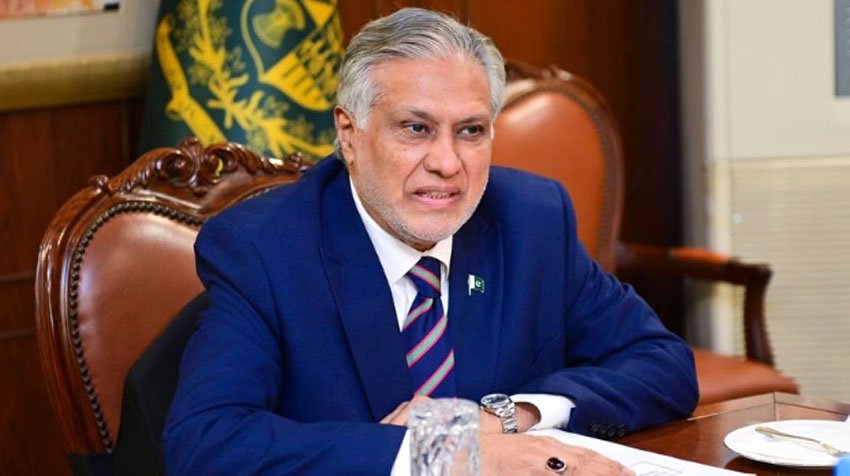
Deputy Prime Minister Ishaq Dar, speaking at the Regional Dialogue 2025 in Islamabad, strongly criticised India’s response to the recent attack in Pahalgam, occupied Kashmir. The April 22 assault, which left 26 people dead—mostly tourists—has become a flashpoint between India and Pakistan, raising fears of escalation in an already fragile regional environment.
Dar said the attack appears to be an attempt to divert international and domestic attention from India’s internal challenges and cross-border terrorism. He suggested the incident may even be “self-choreographed,” echoing Pakistan’s longstanding concerns about false flag operations conducted to malign Pakistan’s image globally.
Dar questioned the credibility of India’s allegations, particularly the speed at which a First Information Report (FIR) was registered following the attack. He noted that the police station where the FIR was filed is located at least 45 minutes from the site of the incident, yet an FIR was lodged within 10 minutes. “Come on. Nobody’s a fool,” he remarked.
Dar also revealed that some international dignitaries had asked Pakistan to assist in apprehending the perpetrators, but he dismissed the suggestion as unrealistic, citing the 230-kilometre distance between the attack site and the Line of Control.
Pakistan has rejected India’s claims of cross-border involvement and has called for a neutral investigation into the attack. The deputy prime minister warned that India’s “unilateral, politically-motivated and highly provocative” actions pose a grave threat to regional peace and stability.
He emphasised that escalating tensions for electoral gains is a dangerous political gamble that endangers millions of lives in the region. Nonetheless, he reaffirmed Pakistan’s commitment to peace, saying the country supports all efforts aimed at de-escalation.
Diplomatic engagement continues as Pakistan reaches out to international partners to present its perspective. Iranian Foreign Minister Abbas Araghchi met with Prime Minister Shehbaz Sharif, Deputy PM Dar, and Army Chief General Asim Munir.
The two sides discussed the Pahalgam attack, broader regional tensions, and ongoing US-Iran nuclear negotiations. They agreed that diplomatic dialogue remains essential to resolving complex issues. Araghchi is expected to visit India later in the week.
Meanwhile, President Asif Ali Zardari met with Chinese Ambassador Jiang Zaidong. Zardari condemned India’s aggressive rhetoric and actions, thanking China for its steadfast support. The Chinese envoy reaffirmed the strong and enduring friendship between China and Pakistan, expressing hope for peace in South Asia. China had earlier called for restraint from both Pakistan and India.
Information Minister Attaullah Tarar also visited the Line of Control, along with local and foreign journalists, to counter India’s allegations of terrorist hideouts in Azad Jammu and Kashmir. Tarar said the visit aimed to expose “false and baseless” Indian claims.
He stressed that there were no terrorist camps in the area, only peaceful mountain communities. The minister said India’s narrative had failed globally, pointing to a lack of international media traction and inconsistencies in India’s claims.
Simultaneously, Pakistan’s military responded to unprovoked firing by Indian forces across multiple sectors along the LoC, including Nakyal, Khuiratta, Sharda, Kel, Neelum, and Haji Pir. Security sources stated that the Pakistan Army responded effectively and remains fully alert to any threats.
On the international front, Pakistan has initiated steps to brief the United Nations Security Council (UNSC) on the situation. Foreign Minister Dar instructed Pakistan’s permanent representative to the UN, Ambassador Asim Iftikhar, to request an urgent UNSC session. The Foreign Office stated that the move is intended to highlight India’s provocative actions, the suspension of the Indus Waters Treaty, and the broader implications for peace and security in the region.
