

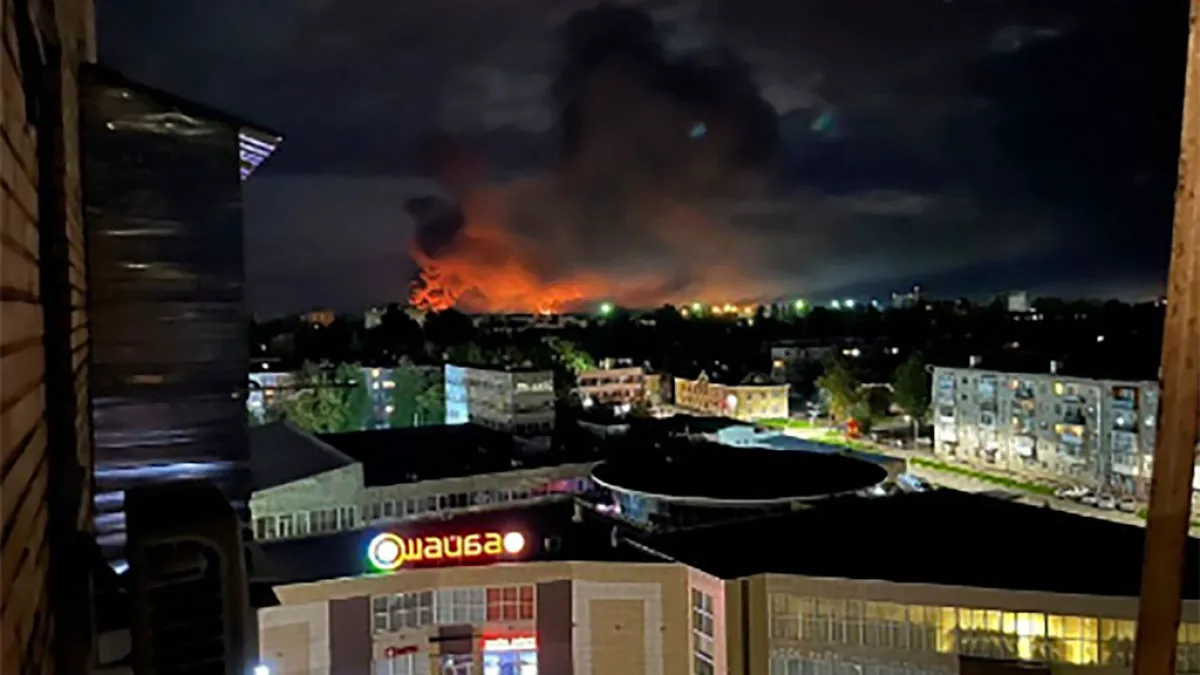

For the second night in a row, Ukraine launched a series of drone strikes targeting Moscow, prompting Russian authorities to temporarily shut down the capital’s major airports, officials confirmed on Tuesday.
Russia’s federal aviation authority, Rosaviatsia, announced that all four of Moscow’s primary airports—Sheremetyevo, Domodedovo, Vnukovo, and Zhukovsky—were closed for several hours due to safety concerns, though flight operations resumed later.
Moscow Mayor Sergei Sobyanin reported that air defence systems successfully intercepted at least 19 Ukrainian drones approaching the city from multiple directions. Debris from the intercepted drones reportedly fell onto a major highway leading into Moscow, but no injuries were reported.
Ukraine has not officially commented on the attacks. However, Ukrainian regional officials noted fresh Russian drone assaults in Kharkiv and Kyiv overnight. In Odesa, one civilian was killed in a drone strike, according to Governor Oleh Kiper.
The latest attacks mark a continuation of Ukraine’s strategy of targeting Russian territory with aerial drones. Just a day earlier, Russia’s Ministry of Defence claimed it had shot down 26 drones launched by Ukrainian forces.
While Moscow reported limited structural damage, some Russian military bloggers suggested that an apartment building in southern Moscow suffered shattered windows. Additional drone activity was recorded in other Russian cities, including Penza and Voronezh.
These drone raids coincide with rising tensions along the Russia-Ukraine border, particularly in the Kursk region. On Sunday, Ukraine claimed its forces struck a Russian drone command center near the village of Tyotkino. Kyiv’s General Staff described the strike as part of broader operations in the area, where Ukrainian troops have maintained a presence since 2024.
Though Moscow asserted in April that it had regained full control of the Kursk region, Ukrainian military sources dispute this, maintaining that their forces remain active across the border.
On Monday, authorities in the town of Rylsk in Kursk said a drone strike damaged an electrical substation, destroying two transformers and injuring two teenagers with shrapnel, according to acting governor Alexander Khinshtein.
Unverified footage shared by pro-Russian military bloggers appeared to show vehicles attempting to break through border tank traps. Some bloggers claimed Ukrainian troops detonated bridges, launched missiles, and used armored vehicles to breach Russian territory.
“Mine-clearing vehicles began opening paths through minefields, followed by armored troop carriers,” wrote military blog RVvoenkor, noting that “a heavy battle is ongoing at the border.”
Ukraine’s Defence Forces issued a statement on Monday confirming their continued presence in Russia’s Kursk region, nine months after initiating their operations there.
Meanwhile, authorities in Ukraine’s northeastern Sumy region—just 12 kilometers from Tyotkino—urged residents in two nearby settlements to evacuate amid escalating hostilities.
Ukraine’s military first entered the Kursk region in August 2024, framing the move as a strategic effort to establish a buffer zone to protect Sumy and adjacent areas. Analysts suggest Kyiv may also be using the region as bargaining leverage in future negotiations.
As drone and missile attacks persist on both sides, civilian casualties and damage in the affected border regions continue to rise.
