

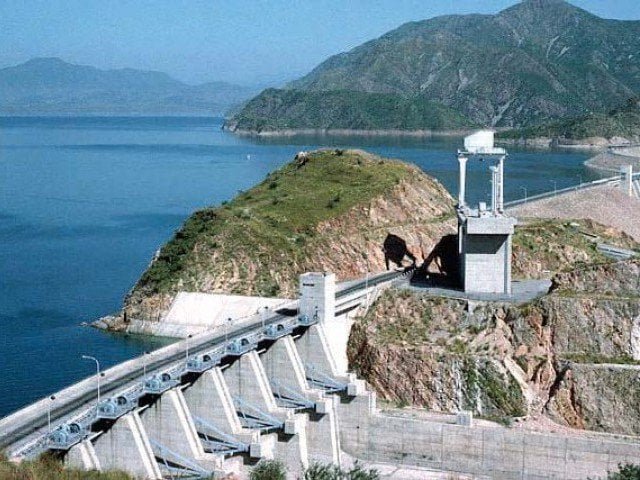

The water level at Mangla Dam has increased to 1,136.30 feet — 86 feet above its dead level of 1,050 feet — thanks to improved inflows, according to the Water and Power Development Authority (WAPDA).
This rise is seen as a promising sign for both agricultural irrigation and hydropower generation, offering relief amid ongoing water shortages and energy challenges facing the country.
WAPDA officials highlighted that the dam’s maximum storage capacity is 1,242 feet. As of Tuesday, usable water storage had reached 1.213 million acre-feet (MAF), a substantial improvement from recent weeks when the reservoir had nearly reached its dead level due to inadequate rainfall.
Current inflows into the dam stand at 44,300 cusecs, while outflows are recorded at 32,000 cusecs. Authorities report a steady increase in inflows in recent days, aided by upstream rainfall and snowmelt.
“Greater water availability at Mangla is essential for meeting the irrigation demands of the upcoming Kharif season and for maintaining hydropower output,” a WAPDA spokesperson stated. “We remain hopeful that this trend will persist in the coming weeks.”
Earlier in the season, water levels at Mangla had fallen dangerously close to the dead level, raising concerns over irrigation supply and electricity production—especially in Punjab and northern regions of Pakistan.
