

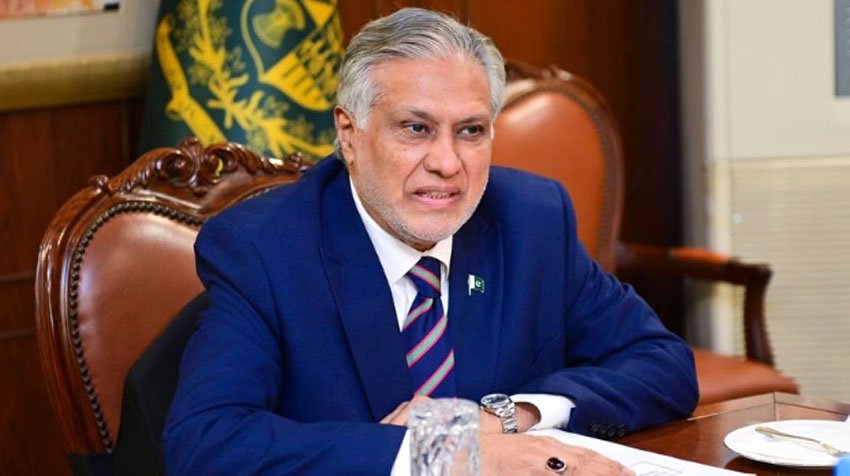

Deputy Prime Minister Ishaq Dar, speaking in the National Assembly, confirmed that Pakistan used Chinese J-10C fighter jets during recent military operations and stated that the Pakistan Air Force could have shot down 10 to 12 Indian aircraft, but exercised restraint.
Prime Minister Shehbaz Sharif earlier presented a comprehensive timeline of events surrounding the Pahalgam incident and India’s subsequent aggression, which included 24 targeted strikes on Pakistani territory. He emphasized Pakistan’s measured and deliberate response.
Dar criticized India’s reaction following the April 22 Pahalgam incident, calling it a clear escalation and a breach of international norms. He noted that when the incident occurred, Prime Minister Shehbaz was in Ankara, and Pakistan promptly issued a strong condemnation the following morning.
According to Dar, India’s Cabinet Committee on Security took several hostile steps, including shutting down the Attari border, expelling Pakistani defence officials, and suspending the Indus Waters Treaty. “India cannot unilaterally revoke the Indus Waters Treaty—it lacks the legal authority,” he asserted.
He added that Pakistan’s National Security Committee met on April 24 and decided to respond to any Indian provocation with full force. “This is not an act of aggression but a defensive response,” Dar clarified.
He also referenced Prime Minister Shehbaz’s speech at the Pakistan Military Academy in Kakul, where a call for an international and transparent investigation into the Pahalgam incident was made. This offer was well-received by numerous countries, according to Dar.
Diplomatic outreach followed, with Pakistan briefing 26 foreign ministers and ambassadors, and over 40 envoys were updated on the evolving situation. Dar noted that even the UN Secretary-General criticized India’s actions, while Pakistan’s permanent representative presented the matter before the UN Security Council.
He further disclosed that India had been in talks with Pakistan regarding the Indus Waters Treaty, while simultaneously suspending its terms—actions Pakistan interprets as hostile. “If India blocks our water, it will be considered an act of war,” Dar warned.
The deputy prime minister accused India of staging another false-flag operation similar to Pulwama. He pointed out that the reported location of the alleged incident was suspiciously far—230 km from the Line of Control. Intelligence reports indicated India was preparing for provocation, which culminated in a skirmish around 12:40 a.m., followed by an hour-long exchange of fire.
Despite the provocation, Pakistan refrained from a full-scale response. “Our air force had strict orders—only engage if payloads were dropped. Had we not exercised restraint, 10 to 12 Indian aircraft could have been downed,” Dar stated.
In closing, he said Pakistan has formally approached the United Nations, documenting India’s violations of international law. He confirmed that 24 strikes had occurred across six Pakistani locations, resulting in 26 deaths and 46 injuries. “The international community must take serious notice of these actions,” he concluded.
