

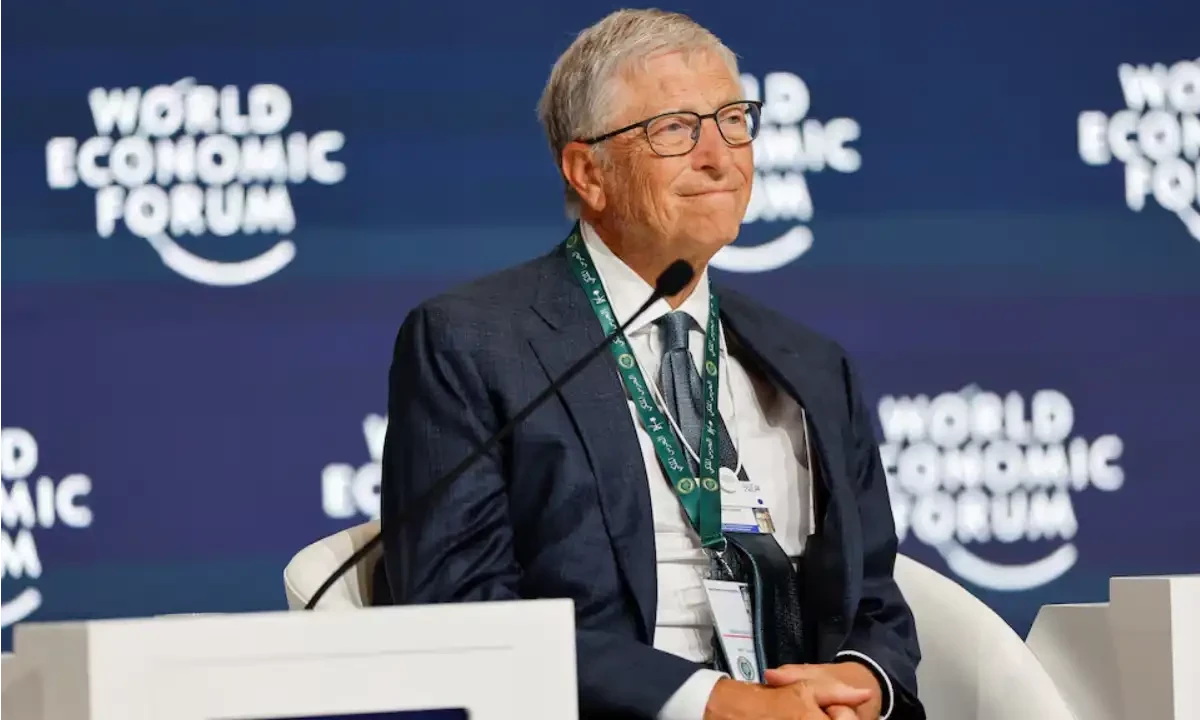

Bill Gates
Bill Gates announced on Thursday a bold and accelerated philanthropic plan to donate $200 billion by the year 2045 through the Bill & Melinda Gates Foundation. The tech magnate, known for his work in global health and education, said the foundation would officially close its doors on December 31, 2045, years earlier than initially expected, as he aims to maximize the impact of his wealth during his lifetime.
Speaking to the Financial Times, Gates linked his decision to urgent humanitarian concerns and recent shifts in global funding priorities. He warned that significant cuts to international aid budgets—particularly from the United States—were already putting millions of vulnerable lives at risk.
He pointed directly at Elon Musk, CEO of Tesla and SpaceX, accusing him of accelerating the dismantling of the U.S. foreign aid system. Gates referenced Musk’s reported role in slashing the U.S. Agency for International Development (USAID) budget through his controversial Department of Government Efficiency (DOGE), with around 80 percent of USAID programs expected to be eliminated.
“The image of the world’s richest man killing the world’s poorest children is not a pretty one,” Gates remarked, highlighting the scale of the crisis. The USAID agency had a global reach, spending $44 billion in fiscal year 2023 to fight disease and hunger. Gates warned that unless reversed, these cuts could erase decades of progress in child and maternal health, predicting a devastating rise in global mortality within four to six years.
In a separate interview with Reuters, Gates stressed that private philanthropy, no matter how well-funded, cannot replace the role of governments in supporting global development. The Gates Foundation plans to increase its annual spending to $9 billion by 2026, and eventually to $10 billion annually—still not enough, Gates emphasized, to fully compensate for the loss of government resources.
Gates and Musk have had a tense relationship in recent years. Once aligned on the importance of wealth redistribution through philanthropy, the two billionaires have since clashed repeatedly. Musk responded to Gates’ criticism with a post on his X platform, calling Gates “a huge liar.” Musk’s representatives have not commented further on the matter.
Despite the friction and the massive scope of the challenge, Gates remains optimistic that governments will eventually return to prioritizing foreign aid. “I think governments will come back to caring about children surviving,” he said.
Marking the 25th anniversary of the Gates Foundation, which he co-founded with Melinda French Gates in 2000 and later expanded with support from Warren Buffett, Gates reaffirmed his commitment to ending diseases like malaria and polio, and reducing preventable deaths.
He acknowledged progress in Africa, where some nations have reallocated domestic funds to maintain aid services, but cautioned that eradicating polio and other critical objectives still hinge on robust U.S. support.
“There are too many urgent problems to solve for me to hold onto resources that could be used to help people,” Gates concluded on his blog, underscoring his belief that meaningful, lasting change must come through a combination of philanthropy and public policy.
